 By admin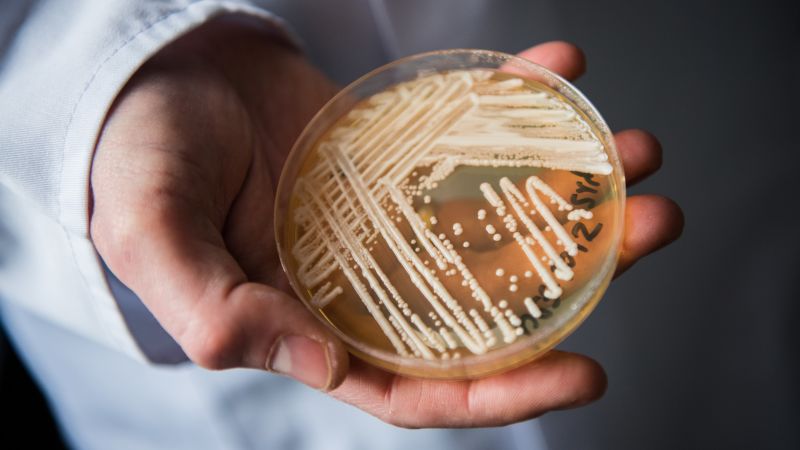
Cases of Candida auris, a fungus found in healthcare facilities, are rising rapidly this year, the US Centers for Disease Control and Prevention says.
Read more Murkowski to oppose Todd Blanche nomination, narrowing his path to confirmation
As of July 25, 3,437 clinical cases in 27 states have been reported, CDC data shows. The agency recorded 4,290 clinical cases in all of last year.
C. auris is primarily a concern for people who are hospitalized. The total number of clinical cases has been increasing since its detection in the US in 2016, the CDC says. The rate has slowed in recent years, but it still remains a “critical public health threat.”
What is Candida auris, and how does it spread?
Candida auris is a yeast, a specific type of fungus, that spreads through contact with contaminated objects and people, according to Dr. Graham Snyder, medical director of infection prevention and hospital epidemiology at University of Pittsburgh Medical Center.
A common characteristic, Snyder said, is itsability to spread and remain in healthcare settings, including nursing facilities and hospitals, as it can resist certain cleaning products. It more seriously affects people who have underlying conditions.
“We quickly learned that Candida auris is very good at sticking around in the environment — and that’s not true for all types of pathogens or germs that may be spread through the environment — so we pay extra special attention when we know somebody has Candida auris to making sure that we clean and disinfect the environment,” Snyder said.
An emerging fungal threat spread at an alarming rate in US health care facilities, study says
The first case of C. auris was detected in Japan in 2009; the first case in the United States was detected in 2016, according to the CDC. The agency C. auris as an “urgent threat,” as it is often multidrug-resistant, meaning certain strains can be resistant to all three classes of antifungal medications used to treat fungal infections.
What happens when people get it?
There are two ways people can have C. auris, said Dr. Scott Roberts, an associate professor of infection prevention at Yale University. The first, colonization, occurs when the fungi appear on a person’s skin, and it’s asymptomatic most of the time. The second, infection, happens when it enters the body through a break in the skin.
C. auris can be detected via a swab of the armpit or groin area.
“Most of the time, the infections occur through bloodstream infection. There’s some entry into the skin somewhere; maybe your immune system’s not as good as it should be. You can’t fight it off, and you lead to a big infection,” Roberts said.
Although this year’s case count may soundalarming, Dr. Nitipong Permpalung, director of mycology research at Johns Hopkins University, noted that there has also been an increase in screening that differentiates between those who are colonized with C. auris and those who are infected, which could account for some of the rising numbers.
“We need to understand that ‘OK, this is a positive screening test, and this is through clinical case, and go from there,’ but I understand the concern. But we need to get some more data, and we need to work on the research in this area to improve the care,” Permpalung said.
Read more Cleaning products used to kill germs may come with hidden risks
Climate crisis might be behind the rise of mysterious superbug C. auris, study suggests
Dr. Ilan Schwartz, an associate professor of medicine at Duke University, said the fungi can cause symptoms like fever, low blood pressure or a high heart rate, as well as a dangerous condition called sepsis, when it enters the bloodstream. Because it spreads more often in healthcare settings, Schwartz said, it primarily affects people who have other health conditions.
Like many germs that can be potentially deadly “in the right circumstance,” Schwartz said, infections can become serious and can be deadly in vulnerable patients, such as those undergoing chemotherapy, recovering from surgery or taking antibiotics.
“Generally, these are going to be in patients who are already hospitalized and who are being monitored, and so the healthcare team should be well aware already if patients are showing signs of a general infection, so I don’t think that it’s something individuals need to be vigilant about,” Schwartz said.
Awareness at the forefront
Roberts said people who are hospitalized or living in other medical settings should watch for symptoms of sepsis, including fever, high heart rate and low blood pressure.
The most important thing people can do if their doctor detects the fungi, Roberts said, is to notify those they live with or those who are around them in a care facility. In addition, focus on washing hands and not sharing medical equipment before it is disinfected.
Although C. auris continues to spread, hospitals and nursing homes can screen people to identify the fungi and potentially isolate them as an infection prevention practice, Roberts said.
“I just have low confidence every facility can do that, or even right now we don’t even know how big a problem it is because a lot of places are not testing for this or don’t have the lab capability to even identify it,” Roberts said.
Roberts noted that once the fungi has colonized a person, treatment generally focuses on any symptoms that develop.
“There’s unfortunately not much to do,” Roberts said. “It’s moreso just awareness that it is on the scan or that it is there in that room.”