 By admin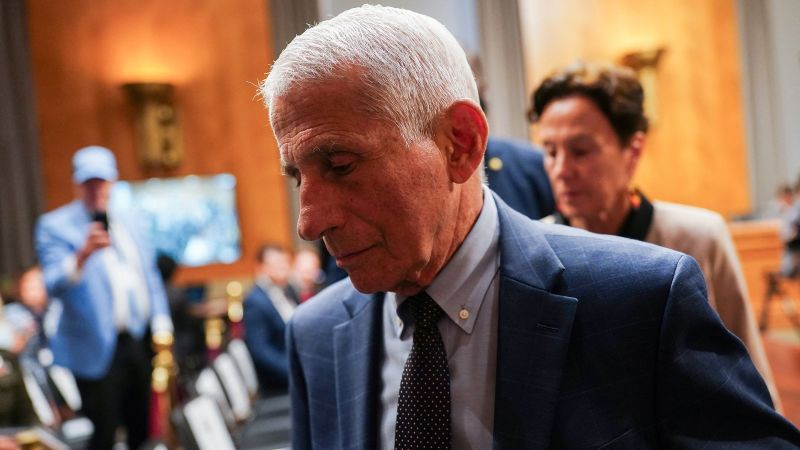
The Covid-19 pandemic was a historic stress test that revealed American politics as too broken to deal with a national crisis.
Read more FDA approves first mRNA-based flu vaccine
Six years later, a new political storm over Dr. Anthony Fauci, once the nation’s most prominent health official, suggests those fractures are now even more toxic. And a long-delayed reckoning over the worst public health emergency in 100 years is more distant than ever.
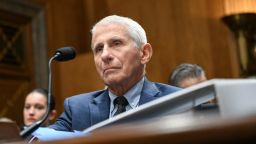
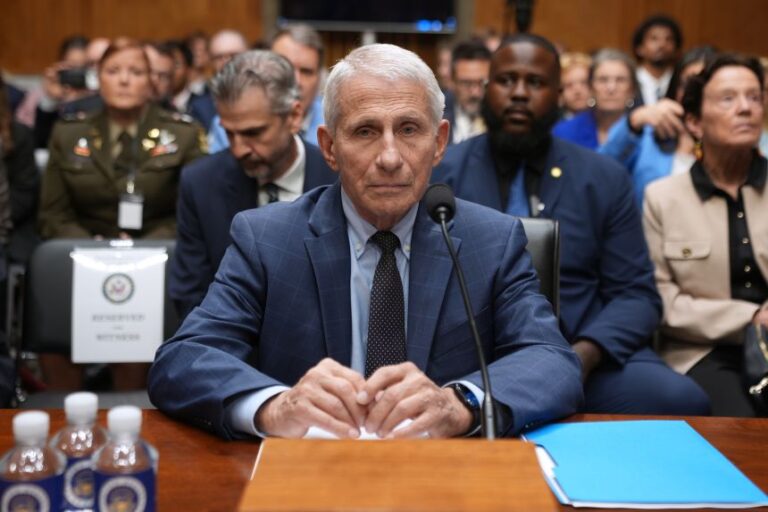
A Republican-led Senate committee is expected to vote to hold Fauci in contempt of Congress on Thursday after he invoked his Fifth Amendment rights more than 100 times during an acrimonious hearing last week.
Committee Chair Sen. Rand Paul accuses Fauci of obstructing his probe into pandemic policies. The former director of the National Institute of Allergy and Infectious Diseases declined to answer questions, accusing his longtime antagonist from Kentucky of laying a trap to get around a pardon he was granted by then-President Joe Biden.
Senate subcommittee obtains Fauci’s phone ahead of contempt vote
Last week’s hearing was a classic Washington melodrama in which each party zeroes in on a larger-than-life personality to grind ideological axes. And a contempt referral by the committee to the Justice Department would raise pressing legal and constitutional questions over the president’s pardon power.
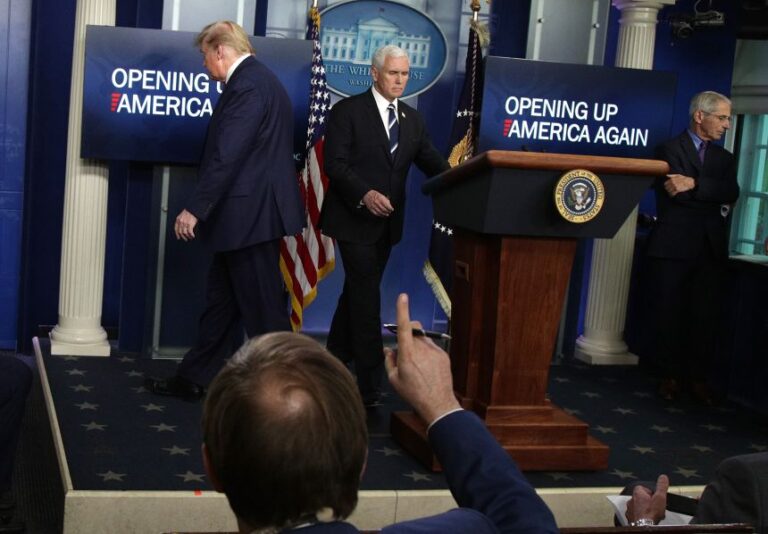
But more importantly, the new Fauci saga is a clarifying moment regarding Covid-19’s still-potent political legacy heading into the 2026 and 2028 elections. The showdown underscores the shattered consensus on public health between MAGA Republicans and Democrats who accuse their foes of flouting science. And it raises the vital question of whether any lessons have been taken from the vicious political disputes that erupted over Covid-19 mitigation methods between career health officials and the first Trump White House, and between Washington and state and local health and political leaders.
Republicans finally see a way to punish Fauci
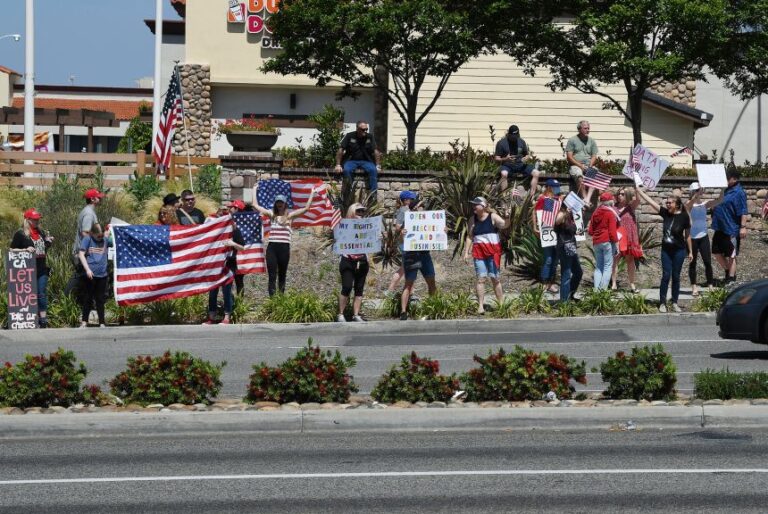
Republican leaders accuse Fauci of presiding over lockdown policies that harmed the economy, public health and children’s education, and of misleading Congress about federally funded research in Wuhan, China, where they contend that a lab leak started the pandemic.
More broadly, they are seeking to whitewash the erratic and sometimes politically self-serving first-term crisis leadership by Trump that contributed to his loss to Biden in 2020. Health and Human Services Secretary Robert F. Kennedy Jr., for instance, accused Fauci of “mismanaging the Covid pandemic” and said “President Trump wanted to end the lockdowns” in a falsehood-filled appearance with CNN’s Dana Bash on “State of the Union” Sunday. While the federal government offered guidelines, it didn’t mandate lockdowns. Such decisions were left to states.
Populist Republicans see Fauci as an exemplar of an elite Washington deep state out to suppress personal freedoms. Ohio Sen. Bernie Moreno last week demanded Fauci “apologize to the people you harmed through your actions,” while Missouri Sen. Josh Hawley called him “the biggest scammer in American history.”
Democrats are welcoming a chance to remind the public of Trump’s Covid-19 failures and — notwithstanding his first administration’s swift efforts to deploy a vaccine — to link them to the president’s second-term assault on public health guidelines, vaccine schedules and academic research.
A shattered legacy
Fauci’s plight is also something of a Washington tragedy. In nearly four decades at the NIAID, he was the rare official feted by Republicans and Democrats alike. Foreign governments regarded him as the gold standard of global health, and his involvement in President George W. Bush’s PEPFAR global anti-HIV/AIDS programs helped save millions of lives.
Fauci was an archetypal Washington power player. But at 85, he’s become a symbol of those who cling to power too long and whose reputations end up tarnished. Excerpts of Fauci’s diaries released by the committee showed a vain and hubristic side as he seemed to gloat over his media coverage, fame and interactions with celebrities.
No one argues that Fauci did everything right. Some of his advice has looked, in retrospect, to be contradictory or not supported by science.
But the political heat around the famous doctor may also be an obstacle to something more important: full accountability across the public square over the pandemic, which might improve the federal response to the next emergency.
In the frightening early days of the Covid-19 panic, officials were making quick decisions without the full knowledge of the properties of the virus as hospitals filled with seriously ill victims. Missteps were inevitable. But sometimes officials gave inconsistent advice or reversed themselves on issues such as masking, resulting in a loss of public confidence.
Read more Senate subcommittee obtains Fauci’s phone ahead of contempt vote
Princeton professor Frances Lee, co-author of the book “In Covid’s Wake” with her colleague Stephen Macedo, points out that Fauci told CNN in January 2020 that while China had shut down travel to try to contain the outbreak, he couldn’t “imagine shutting down New York or Los Angeles.” He added, “Historically when you shut things down it doesn’t have a major effect.”
Yet weeks later, top health bureaucrats were advising governors to close schools and businesses. “How did this happen? And not just that we’re shutting down, but the man who had pronounced the Wuhan approach as unlikely to succeed is recommending it,” Lee said in an interview.
The pandemic was such a horrific experience that most people just wanted to move on. But that desire has tempered a reckoning among public and medical officials for in-depth examinations of the period, Lee argued. “Looking back, what did we get right? What did we get wrong? I don’t see that kind of internal reckoning.”
More controversy surrounds pandemic restrictions. Such measures are complex to evaluate, since they depended on the length of lockdowns, the density of spread of the virus, the variants circulating at any one time, and the quality of local health systems. But a full, depoliticized congressional examination of the pandemic would probe the relative success of red states that opened sooner vs. blue ones that stayed shut down longer. Such a study might address questions about the human toll of decisions such shuttering schools, which left lingering educational, mental and emotional damage.
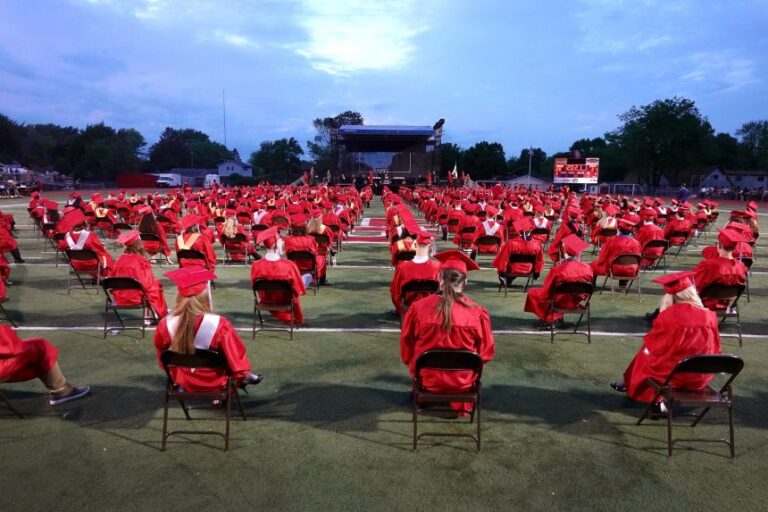
Some critics also believe that senior public health officials were so fixated on their mission of battling the virus that they ignored the full spectrum of consequences. They — and media outlets carrying their messages — might also have focused more on the pain borne by blue-collar employees, who, unlike office workers, could not log on from home.
But Dr. Ashish Jha, who was White House Covid-19 response coordinator under Biden, told CNN’s Bash on Sunday that Fauci “gave advice.”
“Some people listened. Some people didn’t,” Jha said, adding that “accountability has to be with our political leaders, not with scientists who are giving advice.”
The Fauci hearing has also revived the debate about the origins of the virus. At the time, Trump seized on the idea it came from a Chinese laboratory — apparently to distract from his leadership failures. But the preponderance of academic studies and epidemiological data since then suggests that a zoonotic origin — meaning a disease occurs naturally in animals and spreads to humans — is the most likely derivation of SARS-CoV-2, the virus that causes Covid, and that initial transmissions were linked to a wet market in Wuhan.
Trump’s former director of national intelligence, Tulsi Gabbard, accused Fauci in June of funding lab research at the Wuhan Institute of Virology that caused the virus. But documents she released failed to substantiate the claims, and Fauci denies them. Still, Jha told CNN on Sunday that he had changed his own mind on how the virus started. “Based on information I learned and based on information I have seen, I have come to conclude that it is more likely to have been a lab leak,” Jha said.
Since the issue concerns China, an authoritarian state that has refused international demands for more transparency about Covid-19,definitive answers may never emerge. But a congressional process that spent more time in the dispassionate pursuit of answers might offer some clarity.
Will the Fauci storm scare away the leaders of the next national crisis response?
No public official should be above answering fordecisions made in positions of public trust. Fauci’s critics see him as imperious and resistant to scrutiny — even while excusing the failings of Trump, who was often a torrent of misinformation and crank cures during the emergency.
But if an official as respected as Fauci is not immune from vicious, personal vilification by national leaders, other, less high-profile public servants might chose another profession and leave America ill-served in the next crisis.
“These attacks upon Dr. Fauci — it’s not just about him,” Democratic Sen. Andy Kim of New Jersey said at the hearing last week. “It’s sending signals to others … our scientists, our doctors, our healthcare professionals, our researchers. (It’s) trying to show to them that if you don’t get in line with the politics, that you will also potentially be subject to attacks.”
Read more Large cyclosporiasis outbreak linked to lettuce now includes cases in 15 states