 By admin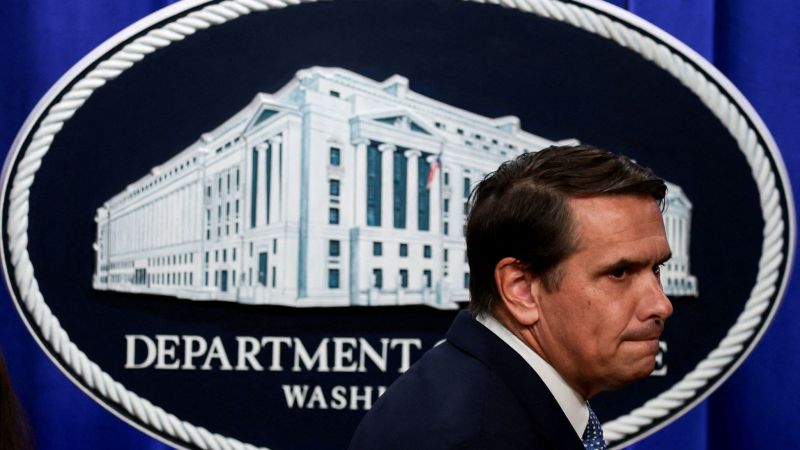
Acting Attorney General Todd Blanche appears to have satisfied the demands of Sens. John Cornyn and Thom Tillis, at least enough to advance his nomination as full attorney general.
Read more What to know about the recent abuse allegations impacting GOP Rep. Max Miller’s reelection race
Blanche late Sunday issued a written document that purports to rescind President Donald Trump’s highly controversial “anti-weaponization” fund and limit the tax immunity that Trump’s own government gave him in the same settlement.
But the assurances aren’t exactly iron-clad.
And even after this standoff, Trump still maintains a massive personal financial benefit from the legally dubious settlement — one Cornyn and Tillis apparently haven’t objected to.
First, the news: Late Sunday, Blanche posted a pair of documents meant to satisfy Cornyn’s and Tillis’ concerns. (Either senator could have blocked his nomination in the Senate Judiciary Committee by voting no, given Republicans have just a one-seat majority on the panel.)
Cornyn and Tillis responded Monday morning by issuing a joint statement saying they “look forward to voting to advance his nomination out of the Senate Judiciary Committee soon.” The committee vote is expected Tuesday.
One document states that Blanche’s May 18 order creating the “anti-weaponization” fund, which the administration has said could be used to pay defendants convicted in the January 6 Capitol attack, is “rescinded and shall have no force or effect.”
The other purports to clarify Blanche’s order giving Trump immunity for tax issues, saying it applies only to past tax issues and only to the “named parties in the lawsuit” — i.e. Trump, his sons and the Trump Organization. Cornyn had said he wanted that portion of the settlement to be narrowed.
But both of these apparent concessions feature clear loopholes.
Resurrecting the “anti-weaponization” fund
The problem with Blanche rescinding the “anti-weaponization” fund order is that it wouldn’t seem to necessarily fully kill off the fund.
As the National Review’s Andrew McCarthy has explained, the settlement’s terms (see our annotation here) state that it could be “modified only with the written agreement of the parties.” That would include Trump.
So while Blanche has rescinded a separate order he wrote that actually created the fund under the terms of the settlement, the settlement itself still exists — and could seemingly be enforced.
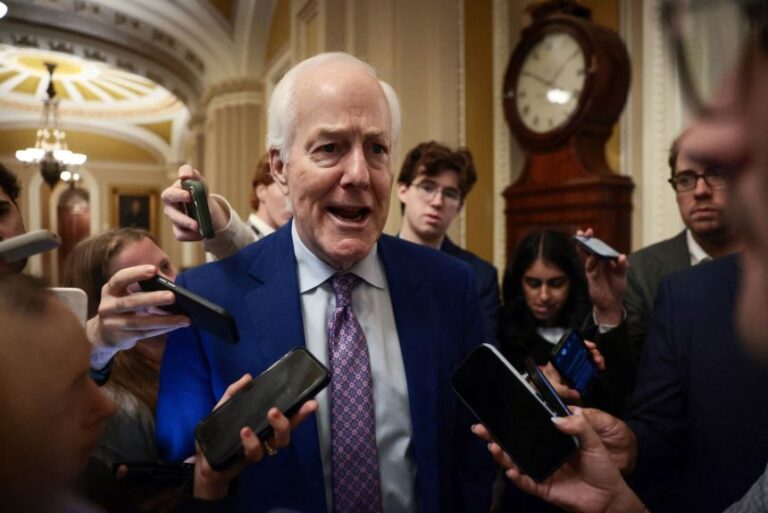
In fact, Cornyn and Blanche basically explained all of this during an exchange at Blanche’s confirmation hearing in mid-July, before they agreed to greenlight his nomination.
When he started pressing Blanche, Cornyn asked whether the settlement agreement had been modified by the parties, including Trump. (It hadn’t, Blanche said.) Under Cornyn’s questioning, Blanche admitted that even if he verbally promised to fully kill off the fund, the settlement remained an “enforceable document,” and Trump could file a lawsuit seeking to enforce its terms.
“There’s no guarantee that he or one of the other plaintiffs might [not] raise that issue by way of a lawsuit and — a breach of contract lawsuit in the future,” Cornyn said.
Blanche claimed that, because the fund would have been ended, “the results of such litigation, whatever it would be, wouldn’t be a revival of the fund.” And Cornyn dropped the issue.
But McCarthy wrote that that’s not the full story.
“Absent such a modification agreement, however, the Anti-Weaponization Fund is still viable and could be revived at any time, despite Blanche’s insistence to the contrary,” McCarthy said.
And even some supporters of the anti-weaponization fund suggested Blanche’s document could just be rendered moot.
Read more Your kid doesn’t want to go back to school. Now what?
“Can be undone after Tuesday,” Republican lawyer Mike Howell, who applied to serve on the “anti-weaponization” fund’s board, wrote on X late Sunday. “The Anti-Weaponization Fund is great.”
Blanche and his allies could argue that the new document would make it politically impossible to revive the fund — because it would look so bad and could draw lawmakers to pass legislation killing it off. But there are no guarantees.
The broad tax immunity deal
While Blanche wrote that the IRS immunity deal was limited to the parties to the lawsuit — seemingly Trump, his sons and the Trump Organization — it’s not clear how solid that is, either.
The second document says that Blanche “restates that it is DOJ’s interpretation that the Order only has any effect” for the parties to the lawsuit. In other words, they’re casting this as a clarification rather than a modification.
But the original document sounds like it applies more broadly than just to Trump, his sons and the Trump Organization.
It says the federal government will be “FOREVER BARRED and PRECLUDED from prosecuting or pursuing any and all claims … that … have been or could have been asserted by Defendants against any of the Plaintiffs or related or affiliated individuals (including, without limitation, family or others filing jointly), or parties including trusts, parent, sister, or related companies, affiliates, and subsidiaries …”
It’s difficult to square that with how limited Blanche says the immunity deal actually is. And this document, unlike the one pertaining to the anti-weaponization fund, wasn’t signed by Blanche. So again, the issue is whether Blanche’s new document actually changes anything, legally speaking.
Cornyn and Tillis in their statement Monday morning claimed Blanche’s new document was a “binding written order.”
A major financial windfall, regardless
But even if the narrower scope is operable, the updated terms would still allow Trump a major potential financial benefit.
The New York Times has written that giving Trump personal immunity from past tax issues could spare him a $100 million tax penalty.
What’s more, he will have earned this benefit in a highly dubious manner. This immunity will have come from a lawsuit and settlement that a judge has said amounted to an effort to “manipulate the judicial process.” This is because Trump earned the settlement by suing a federal government that he personally exercises control over.
In other words, even if the “anti-weaponization” fund is fully dead and the IRS immunity has actually been narrowed, legally speaking, Trump still comes out of all of this with a major personal win.
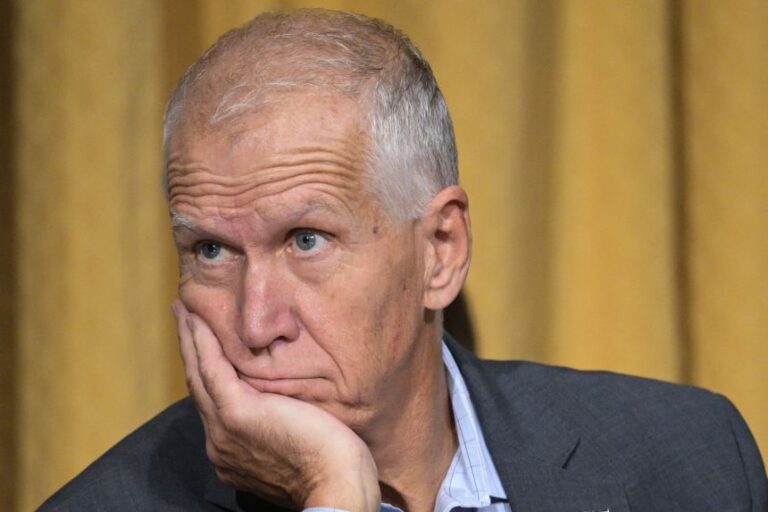
It’s still subject to court battles that could invalidate Trump’s immunity. But Cornyn, Tillis and the Republicans who are going to vote to confirm Blanche have apparently greenlit a potential major financial windfall for Trump — a man who has already reaped huge financial rewards from the presidency, rather shamelessly.
So, yes, Blanche ultimately gave in somewhat. The whole thing surely makes it more difficult to revive the “anti-weaponization” fund, at least politically.
But it’s not a case of GOP senators holding a hard line against Trump and getting iron-clad concessions that leave him empty-handed. Far from it.
Read more Progressive Cori Bush seeks to return to Washington by ousting moderate Democrat
“It’s not a big ask,” Cornyn said last week of his demands.
Indeed.