 By admin
As President Donald Trump pleads for tens of billions of dollars to pay for the nation’s war with Iran, Democrats in Congress have offered an unequivocal — and historically unusual — message.
No.
Trump’s operation in Iran has now become the most partisan war in modern US history, marking the first time that one party is willing to fully reject wartime funding requests from the country’s commander-in-chief.
Democrats are, for the first time in at least a century, in lockstep against a war from the start. They are refusing to support more funding. They are voting en masse to demand Trump pull troops out. They are even rejecting a broader Pentagon policy measure in protest — which includes provisions mostly unrelated to this particular war, such as one that would raise troop pay.
It’s a seismic political shift from years past, when Democrats would cower from accusations of not supporting troops in the middle of a conflict. But party lawmakers contend that the American public, including Republican voters, are on their side, and that the GOP’s support for the war will be a real dividing line heading into the November election.
“They absolutely own it,” a fired-up Rep. Pat Ryan of New York, who served two tours in Iraq, said of Republicans. “We’ve lost multiple additional soldiers. They’ve lied and covered up casualties. Like, what are you doing?”
GOP leaders are furious, with Speaker Mike Johnson calling it “shameful” for Democrats to refuse funding for the Pentagon, especially amid concerns about depleted munitions and as the administration has sought nearly $70 billion more in emergency cash to help pay for military operations in Iran.
“Democrats don’t want to play along,” Johnson said. “Why? Because they have a problem with the president, and they think they’re going to get a political advantage over this.”
Democrats’ opposition is multifold. The party is generally more skeptical now of foreign entanglements and much less sympathetic to Israel, the key US partner in Iran. But the party is even more suspicious of Trump — particularly compared to the last GOP administration in wartime — and are incensed at how he’s handled nearly every part of the war in Iran. And they’re emboldened by the president’s failure to sell the conflict to the public from the beginning, setting the table for a war that is uniquely unpopular just months into the conflict, despite fierce competition for that mantle.
‘Going it alone’
Led by their ranks of military veterans — like Ryan, who fought in the Middle East wars of the early 2000s — Democrats are now prepared to use their limited powers in the minority to block those funding requests until Trump and congressional Republicans can present a real plan to end the war.
And party leaders, like House Minority Leader Hakeem Jeffries, plan to put those veterans at the centerpiece of their messaging going into the midterms, according to multiple sources briefed on those discussions.
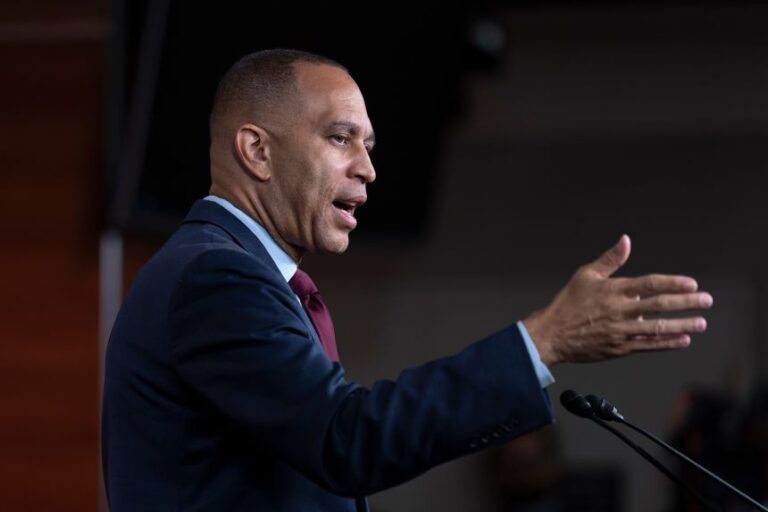
“We’ve got to be willing to support the troops … but there are also times when we have to say enough is enough,” added Rep. Seth Moulton, a Marine Corps veteran who was deployed four times to Iraq.
“Clearly, with Trump and his losing war in Iran, Democratic veterans are saying enough is enough, and a lot of fellow Democrats are following our lead,” Moulton said.
As the US has stepped up its bombings in the last two weeks and the broader conflict escalates, the politics of the Iran war have become more perilous at home. Just 29% of Americans support it, according to a recent Washington Post-Ipsos poll, and even some Republicans acknowledge there’s been virtually no attempt to convince the public, or Congress, why the war is necessary.
Rep. Don Bacon, a Republican defense hawk who is retiring from politics this year, said Trump is to blame for failing to bring Democrats on board.
“I don’t think the president’s done a good job trying to get bipartisan support for this. Going it alone does not work,” warned Bacon, who spent 29 years in the Air Force, including as a commander in Iraq.
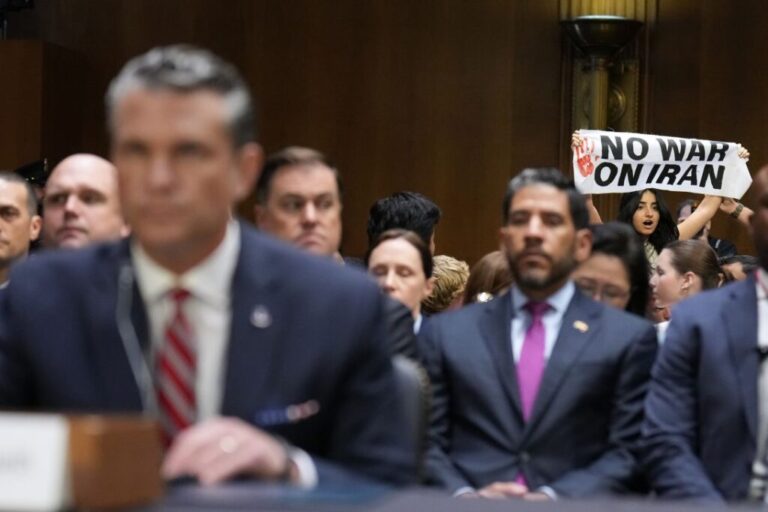
In the five months since the first US airstrikes killed Iranian leaders, Trump and his Pentagon leaders have said little about their plans abroad, with highly mixed messages about the overall objectives. Even in private briefings, senior lawmakers have been unable to get answers to basic questions about the Pentagon’s funding needs or strategy.
“The idea that … ‘we don’t need a single Democrat,’ it’s not smart. Because in the end, we need these guys. We need to have a better defense for our country,” Bacon said.
Democrats project campaign confidence
In another mark of the dramatic political shift from after the last pair of Middle East wars, the House’s most endangered Democrats insist they aren’t worried about a barrage of GOP attacks for not supporting the troops.
“I’m sure they’ll campaign that way,” Rep. Henry Cuellar, who represents a competitive district in south Texas and sits on a critical defense spending subcommittee, said of the potential GOP attacks.
But, he added: “It’s very unpopular. People are tying it to the high gasoline prices. Part of it, (Trump) campaigned he was going to stop endless wars, and here we are.”
Rep. Susie Lee, who represents a swing seat in Nevada, made clear she would not support the GOP’s Iran funding plan — “I’m not voting for it” — and said her biggest priority is getting information for her own active-duty constituents who are under attack overseas.
“I’ve supported defense spending. I will continue to support spending and support our troops, but there’s no strategy on how this war is going to end,” she said.
For Republicans in difficult races, the issue can be complicated. They’re trying to align themselves with the military but also are fully aware of voter anger about higher prices at the pump.
“We have to protect America. We have to protect American troops,” said Sen. Jon Husted, a vulnerable Ohio Republican. “I want the war to end, I want the war to be over, I want gas prices to come down, but I also don’t want to weaken our military.”
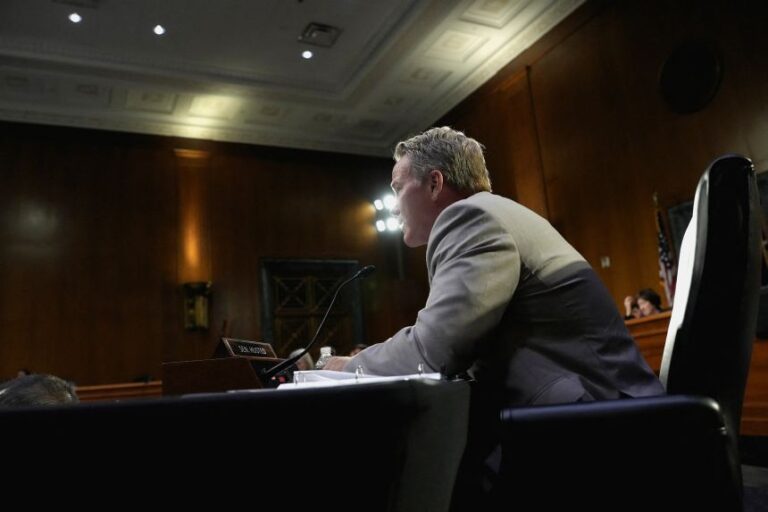
Sen. Susan Collins, the endangered Maine moderate locked in a tough battle for reelection, was non-committal when asked if she’d back more funds, noting that her Senate Appropriations Committee had just heard testimony from Pentagon leaders about the funding request.
“Now the committee will work its will,” she said.
A very different Middle East war
In 2007, at the height of the insurgency in the Iraq war, then-Speaker Nancy Pelosi helped to deliver tens of billions of dollars for the Bush administration’s two increasingly unpopular wars in the Middle East.
Roughly two decades later, the former wartime speaker is clear that she will not vote to support Trump’s war in Iran in any fashion.
“It has not been approved by Congress. And we don’t see a plan, a purpose, an exit strategy. That’s the sloppiest approach to our national security that I’ve ever seen,” Pelosi told CNN.
Pelosi, a San Francisco liberal, had voted against authorizing Bush’s war with Iraq back in 2002. But roughly 40% of her fellow House Democrats did support it, as well as more than half of Senate Democrats, including Joe Biden, Hillary Clinton and then-Rep. Adam Schiff. That vote came after a furious pressure campaign by the Bush administration to sway lawmakers to back the operations, including public hearings, member briefings and speeches.
The push to support troops in warzones at that time was so strong that Democrats repeatedly acquiesced to the Bush administration’s funding requests — even after Pelosi and her party took back the House a year prior with pledges to bring troops home.
It wasn’t the first time Democrats had bowed to the pressure.
Rep. Emanuel Cleaver, a senior Democrat from Missouri, recalled watching as a child as then-President Richard Nixon spent years trying to sell the public on the war with Vietnam.
That sales pitch ultimately failed. But, Cleaver argued, Nixon and right-hand man Henry Kissinger at least would “come across as strategic.” Democrats in Congress continued to fund the war until the very end.
With Trump’s operations in Iran, however, there has been no vote to go to war. The president has made no argument to voters or to Congress.
‘Nobody likes it’
And there’s dwindling support even in Trump’s own party.
“I think 95% of everybody in that room in there realizes that this is a mistake, and there’s no way out,” Cleaver said, nodding toward the House chamber, where every Democrat — and a handful of Republicans — had just voted to halt Trump’s war in Iran.
On his way to the House chamber that day, Cleaver walked the halls with a Republican member, whom he refused to name but said privately ranted about the war.
“He was saying, ‘This is absolutely crazy.’ Nobody likes it. Even the guys who are gonna support the bill don’t want it.’ They realize that this is a quagmire,” Cleaver said.

Sen. Rand Paul of Kentucky is one of the few Republicans who will say it out loud.
“The Iran war has not been a success. I’ve been opposed to the Iran war from the beginning,” Paul said. “I think, by any objective matter, we’re worse off, we’re measurably worse off than we were before the war.”
Asked if Republicans would suffer backlash at the polls come November, Paul deadpanned.
“Probably,” he said.
CNN’s Alison Main, Casey Riddle, Abigail Roedersheimer and Akansha Singh contributed to this report.
Read more Trump administration admits it canceled clean-energy grants in states that voted for Kamala Harris