 By admin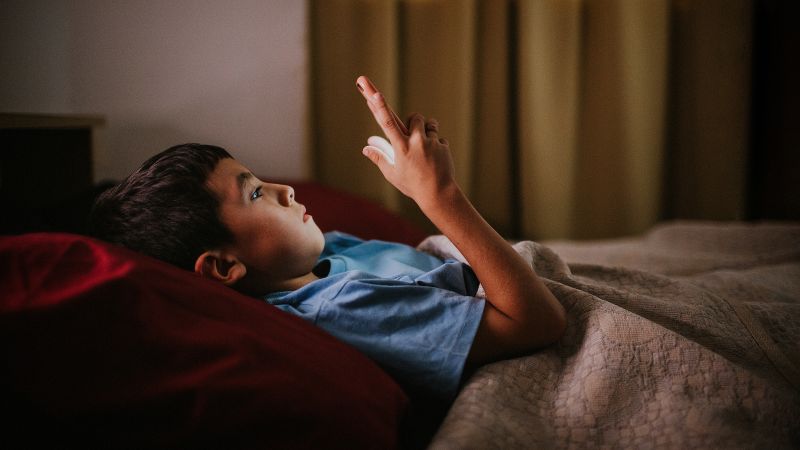
Kara Alaimo is a professor of communication at Fairleigh Dickinson University and advises parents, students and teachers on how to manage screen time. Her book “Over the Influence: Why Social Media Is Toxic for Women and Girls — And How We Can Take It Back” was published in 2024.
Read more Ocasio-Cortez endorses Abdul El-Sayed in Michigan Senate race
You already know experts say not to let your kids keep phones in their bedrooms overnight, but if you’re like most parents, it’s happening anyway.
New research gives parents reason — and a good excuse — to change that.
Kids who use screens in their bedrooms overnight use them more and have more problematic screen use a year later, according to a national survey of nearly 8,000 12- to 14-year-olds published in June in the medical journal Acta Paediatrica.
What’s more, children looking at screens in their bedrooms at night are more likely to be cyberbullied and to cyberbully others, according to a second study published Tuesday in the Journal of Adolescent Health. Both reports drew upon the Adolescent Brain Cognitive Development Study, the biggest national long-term study of children’s health and brain development.
The higher rates of cyberbullying among kids who use their phones at night could be because parents don’t monitor screen time as much when children are in their bedrooms then, said Dr. Jason Nagata, associate professor of pediatrics at the University of California, San Francisco, and lead author of both recent studies.
One limitation of the research is that the young people self-reported cyberbullying, so there may be more of it going on than children wanted to admit on surveys, Nagata said.

L.A. Unified enacts reasonable rules for screens in schools but your kid’s school hasn’t. Now what?
Young people are also spending an astonishing amount of time on their phones when they should be sleeping, according to the research. The average young person spends almost an hour on their phones between 10 p.m. and 6 a.m. on school nights, and most are on their phones between midnight and 4 a.m. on weekdays.
Of course, the American Academy of Pediatrics and experts such as myself have been telling parents not to let kids keep phones in their rooms while they sleep for some time. But the new studies give parents ammunition to enforce these rules, Nagata said.
What’s important about these new studies, he said, is that they show specific parenting practices can improve kids’ experiences with screens.
Put away screens at night
Parents may not be able to limit screen use all the time, Nagata said. But bedtime is a “high yield time to do that.”
“Sleep is just so important,” he said. “Most teenagers don’t get sufficient amounts of sleep, and lack of sleep can affect mental health, physical health and a number of things. So, I do think that if you have to choose your battles, trying to limit screen use in the bedroom at bedtime can be really important.”
It’s best to leave phones outside bedrooms altogether, Nagata said. If that’s not possible, the next best thing is to turn them off at night.
How can you avoid big battles with your kids about this? What helps is “having conversations about the benefits of sleep for brain development, for mental health and overall well-being, for the entire family,” said Anna Seewald, a Princeton, New Jersey-based psychologist and host of the “Authentic Parenting” podcast. Seewald, who was not involved in the research, suggested reading articles and listening to podcasts with your children about the benefits of sleep.
Make your mealtimes screen-free

The research also found that when young people look at screens at mealtime, they’re more likely to be victims of cyberbullying. This problem could be because kids aren’t connecting with parents or guardians to talk about what’s happening in their lives.
Meals are “an opportunity to check in with your family” about how things are going for everyone, Nagata said.
The same study also found that kids who ate while watching screens gained more weight, he said. “The more kids are distracted while they’re eating in front of screens, the more they actually are likely to overeat or eat in the absence of hunger,” Nagata said.
Read more Securing America’s 250: Law enforcement faces shifting plans and World Cup demands
Instead, have a central place where everyone leaves their phones at mealtimes, Seewald suggested. That includes parents like me.

Some of what happens during youth can’t be reversed. It’s another reason to rethink kids’ screen time
When you discuss putting away phones while eating, don’t focus on what you’re taking away, she said. “Frame screen-free meals as a way to feel more connected, not as a punishment, because then you have children on board with you.”
Make mealtimes fun by using cards with questions to spark conversations, having everyone share what they’re grateful for, talking about the best and worst parts of everyone’s day, playing games or telling jokes, Seewald said.
“When children reach for their phones, they’re trying to meet one of their core essential emotional needs — either connection or belonging or feeling seen and valued or appreciated,” she said.
“If we meet those needs in our homes, via connection and dancing and music and laughter and conversation, children will not reach for their phones.”

New surgeon general’s advisory raises alarm about screen time risks for kids and teens
Kids copy their parents
A top predictor of kids’ problematic screen use is parents’ problematic screen use, the research found. When parents or guardians used screens more, their kids were more likely to use screens more a year later and to have symptoms of addiction and social media use that can lead to conflict, Nagata said.
One of the best things parents can do is model healthy screen use for their kids, Nagata and Seewald said.

Cell phone use affects parent-child interactions, even when adults aren’t online
Guess where the rule about screen-free mealtimes isn’t always followed? To be honest, in Nagata’s home and in mine.
My husband is an emergency room doctor who works many nights and weekends. So when he’s not home, I leave my phone on the table in case he can take a quick break for a video call with our family.
Similarly, Nagata was on call last weekend. The day we spoke, he told me he took phone calls at dinnertime a night earlier. When that happened, he explained to his kids that he was helping other sick children, not watching videos on social media.
So, when you have to break the rules, explain why, he said.
Modeling good behavior won’t always be easy. But the good news is that putting away everyone’s phones at nighttime and mealtime seems to improve kids’ screen time experiences.
I bet parents will also sleep better knowing they’re protecting their kids from these negative effects of tech.
Get inspired by a weekly roundup on living well, made simple. Sign up for CNN’s Life, But Better newsletter for information and tools designed to improve your well-being.
Read more Trump’s ‘big beautiful bill’ is driving aspiring doctors to reconsider their careers