 By admin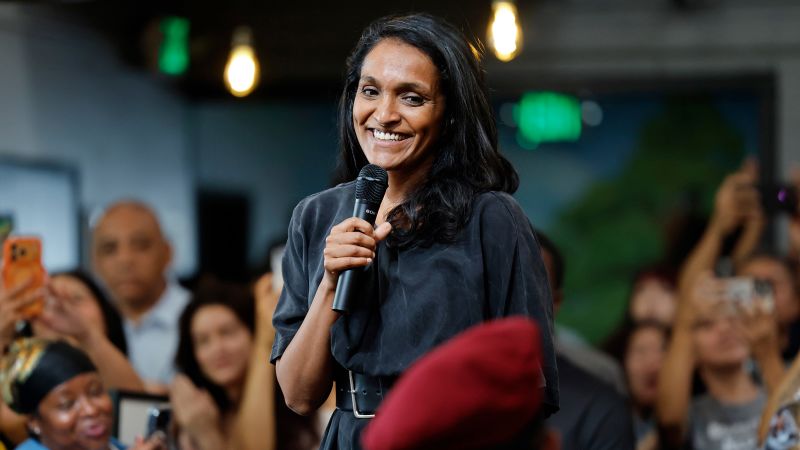
Democratic socialists might be having their best year ever.
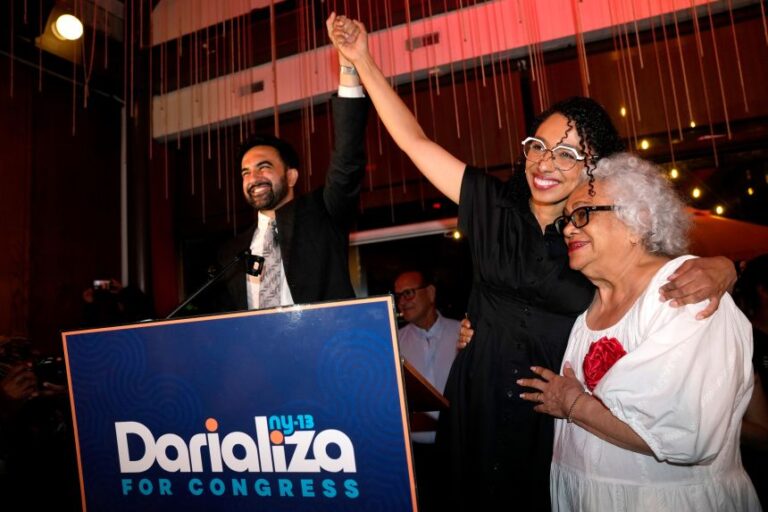
After they took over the mayoralties of New York and Seattle on January 1, they won a congressional primary in Philadelphia last month. A couple weeks ago, their candidate, Nithya Raman, won one of two competitive spots for the Los Angeles mayoral general election, facing incumbent Karen Bass. They won the primary for mayor of Washington, DC, last week. And now they’ve won a pair of high-profile primaries in New York City, including Darializa Avila Chevalier’s upset of Rep. Adriano Espaillat, the head of the Congressional Hispanic Caucus.
Read more Bad cybersecurity by Secret Service agents put US officials at risk, inspector general says
There is a caveat when considering how ascendant the democratic socialists are: Their victories are largely relegated to big, deep-blue cities, especially New York City. But it’s clear they’re a growing force to be reckoned with in American politics.
That has some Republicans licking their chops — and some centrist Democrats rather anxious.
Not that long ago, the s-word was clearly a label Democrats wanted to avoid. But Americans and especially Democrats have warmed to the concept of socialism in recent years.
In 2010, a Gallup poll showed 50% of Democrats had a favorable view of socialism. As of last year, before the victories of now-New York Mayor Zohran Mamdani and now-Seattle Mayor Katie Wilson, that number had risen to 66%.
The data also suggests the increase in support for socialism could be related to declining faith in capitalism — which is an issue not just with Democrats, but also the political middle.
In fact, Democrats last year had a significantly more favorable view of socialism (66%) than capitalism (42%).
As recently as 2012, those were reversed.
The same Gallup poll showed favorable views of “big business” declined from 58% in 2012 to 37% in 2025.
Similarly, a Fox News poll in March showed nearly half of registered voters (49%) described capitalism as working “not very” well or “not at all” well.
That view was especially popular among Democrats (72%), but it was also embraced by most independents (60%).
The same survey showed 38% of registered voters said it would be a “good thing” if the United States moved away from capitalism and more toward socialism.
That’s not close to a majority — but it’s up from 18% in 2010. And that 38% is a really sizable chunk of voters, sizable enough that it shouldn’t be too surprising that Democratic primary voters, in particular, would at least be open to democratic socialist candidates.
But just because Democrats are open to it doesn’t mean it’s good for their party brand.
Read more How well a cancer treatment works may depend on the time of day you get it
President Donald Trump and his fellow Republicans have spent years attaching the national Democratic Party to socialism, after all. And there is evidence that could help them.
A recent Marquette Law School poll tested Americans’ views of the Democratic Socialists of America (DSA) organization. While Democrats viewed it favorably by a 42%-17% margin, its overall numbers were poor: 21% favorable to 48% unfavorable.
But there’s a catch. Given those numbers, one might assume that the most prominent democratic socialists in US politics would be quite unpopular.
Wrong.
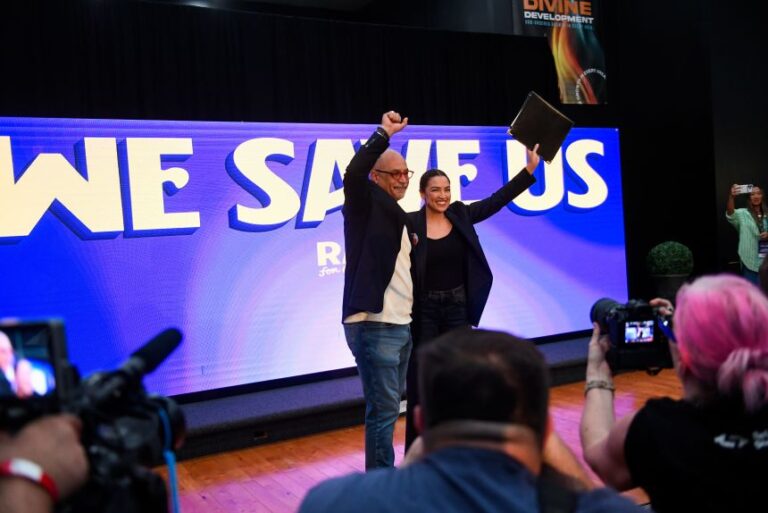
In fact, the two best-known democratic socialists are probably Sen. Bernie Sanders of Vermont and Rep. Alexandria Ocasio-Cortez of New York. And a Gallup poll last summer showed they were actually more popular than every other major US political figure tested, including Trump, top members of his Cabinet, former President Joe Biden and California Gov. Gavin Newsom. Sanders was the most popular US political figure tested.
The picture was similar in the Marquette Law School survey that showed the DSA’s general unpopularity.
Which points us to perhaps the biggest lesson here: Socialism and democratic socialism are unpopular, yes, but the labels don’t sully all who are associated with them. Much depends on how they’re packaged and other attributes of the candidate.
Sanders has been a pretty popular figure in US politics for some time now. And even Ocasio-Cortez, while a lightning rod for the right, has a proven ability to expand her appeal and avoid being too easily caricatured as an extremist.
That said, others who come on to the scene might not be so adept at avoiding creating problems for their party. Just look at the paper trail left by Avila Chevalier, for example, to get a taste for how the ascendance of the democratic socialists could pose problems for Democrats more broadly.
In addition to her history of extreme statements in now-deleted social media posts, Avila Chevalier also attended a pro-Palestinian rally in Times Square on October 8, 2023, the day after a massive Hamas terror attack in Israel. (That highlights another tough problem for Democrats, as their primaries have advanced a series of strongly anti-Israel candidates who could test the tolerance of the broader electorate.)
It also remains to be seen how many other democratic socialists might win primaries in the coming weeks in areas of the country where their movement hasn’t gained as much of a foothold.
But Ocasio-Cortez has brushed off concerns that those candidates would drag down other Democrats.
“I feel like it’s deja vu all over again. There was so much fear around that when I was elected, and none of it bore out to be true,” Ocasio-Cortez told reporters on Thursday. “Voters vote for what is happening in their community and what’s on their ballot.”
Read more Rubio’s spin on the Iran MOU sounds different from Trump and Vance
CNN’s Alison Main contributed.