 By admin
Consider the established entrepreneur and world traveler who says he checks off boxes for both “over 6 feet” and “over 6 figures.” Or the CEO seeking a beautiful muse to share “international adventures” and a “curated lifestyle.” Then there’s the dude pictured in the driver’s seat of a blue convertible who insists he’s “less of an a**hole than I look.”
Read more Betcha can’t eat just one: Addiction to ultraprocessed foods is real and increasing
Scroll matchmaking profiles and you’ll find posts highlighting three specific qualities on repeat: “looks, money and status” — or LMS for those hip to modern dating lingo.
Sure, touting LMS features might make more people swipe right, but if you’re looking for lasting love, this same triad could leave you lonely.
Physical attractiveness, financial security and social standing may impress people initially — driving short-term attraction and sexual interest. But ultimately, studies show, they create distance instead of closeness and can stand in the way of true connection.
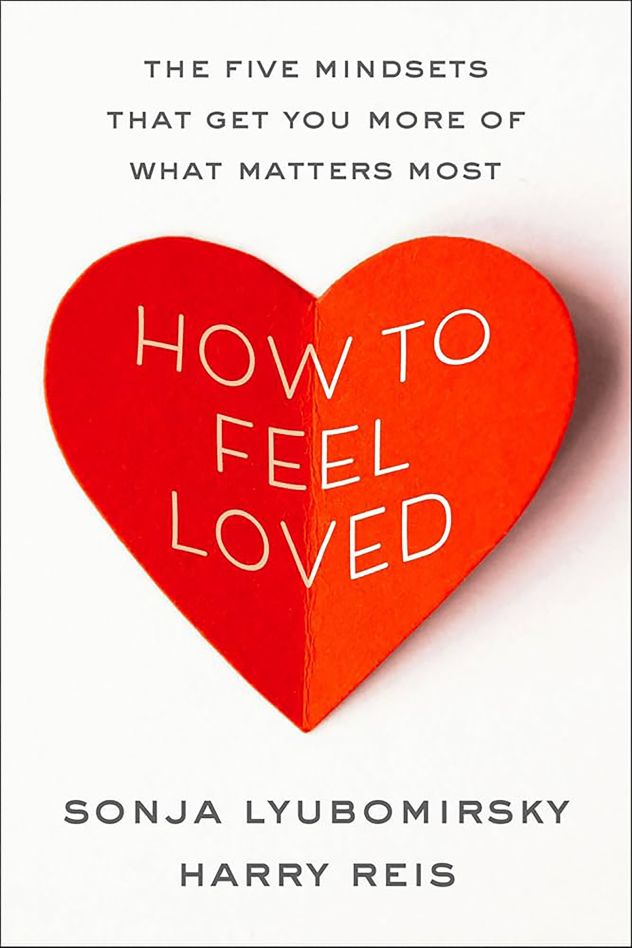
Many Americans believe that if only they were wealthier, more accomplished or more beautiful they would feel more loved, happiness expert Sonja Lyubomirsky and relationship researcher Harry Reis explain.
The science tells a different story.
Instead of trying to impress, seek to be known, the authors urge in their recent book, “How To Feel Loved: The Five Mindsets That Get You More of What Matters Most.” Lyubomirsky, a distinguished professor of psychology at the University of California, Riverside, and Reis, a professor of psychology at the University of Rochester in New York, offer evidence-based strategies for forging meaningful, loving ties — quality connections that studies show have an impact on both sickness and health.

5 ways losing love affects you and what an expert says you can do to start feeling better
On par with food and water
Far more than just nice to have, a loving connection is an essential well-being requirement.
That’s because humans are a social species. Our mammalian brains encode feeling unloved as a threat to survival. Because the roots of feeling loved are deeply embedded in the most ancient parts of the brain, Lyubomirsky and Reis hypothesize in their book that “humans wouldn’t have survived as a species without feeling loved.”
Decades of evidence showing the critical role of social connection for both mental and physical health reinforce the point. And the influence that both romantic and platonic relationships have over a person’s lifespan raises about the current declines in social health.

‘Quiet relationships,’ ‘soft launches’ and the rest of Gen Z’s new love language
Costs of missed connections
“Connection is as essential as food and water,” Kasley Killam wrote in her book, “The Art and Science of Connection: Why Social Health Is the Missing Key to Living Longer, Healthier, and Happier.”
“Over the past 30 years, the percentage of Americans with 10 or more close friends dropped by 20 percent,” Killam explained.Yet Americans long for greater closeness.
Although more than 75% of participants in the 2024 American Friendship Project said they were satisfied with the number of friends they had, more than 40% felt they were not as close to their friends as they would like. Feeling a lack of connection is nothing short of dangerous, according to Killam. It increases people’s risk of stroke, their risk of dementia and their risk of early death.

Myths as roadblocks to that loving feeling
If the stakes are so high — and the benefits so powerful — why aren’t we better at forging and maintaining that loving feeling? Because we get stuck in misbeliefs about exactly what will bring us the love we need, Lyubomirsky and Reis said.
They point to five core myths that interfere with feeling loved:
🚫 If only I were more attractive, powerful or successful
🚫 If only I could make sure others knew my positive qualities and successes
🚫 If only I could hide my shortcomings
🚫 If only my partner could speak my love language
🚫 If only I could get my partner to love me more
It turns out feeling loved does not come from changing ourselves or others. Instead, , it comes from changing our conversations.

Kara Swisher wants to live forever: How to hack loneliness
The love impact of a heart-to-heart
To give and receive more love, Lyubomirsky and Reis advise upgrading your approach to communication with these strategies:
- Listen to learn. Next time you’re in a conversation, instead of waiting to jump in with a response, quiet your inner voice and listen like your only job is to understand. Ask yourself: What’s it like to be them right now?
Try this:Listen without interrupting. Nod, reflect, ask a follow-up question and avoid offering advice unless asked. Just show the other person that they matter.
- Show genuine curiosity through asking better questions. Dig deeper than “How was your day?” with invitations to share such as these: “What happened this week that made you think?” or “What’s something people misunderstand about you?”
Try this: Pose a question you’ve never asked before, for example: “What’s something you’ve changed your mind about?” Then listen.
Read more Startling science: Taking an omega-3 supplement doesn’t boost memory or cognition
- Share important parts of yourself, not all at once but gradually. You don’t need to share your deepest secrets right away; start small.
Try this:Instead of “I’m fine,” offer something real, like, “I’m nervous about this presentation tomorrow” or “I’m struggling today.”
- Share warmth and kindness. Show you care about another’s well-beingby offering a warm smile, a gentle tone, a quick check-in or a thoughtful text.
Try this:Sharea heartfelt compliment you’d normally keep to yourself. Small acts of micro-kindness that let your warmth shine through add up.
- Show nonjudgmental compassion. Open the door to empathy by offering grace and replacing labels with questions. Instead of “They’re selfish,” ask yourself, “What burden are they shouldering right now that might be driving this behavior?”
Try this:Zoom out. Instead of defining a person by a bad moment, step back to consider extenuating circumstances. They may be tired, stressed, grieving or scared — in other words, human. Take it as a given that you might not know the whole story.
These approaches work in long-term relationships, too. We often think we know our partners through and through, but this false assumption can mean we fail to ask the curious questions that can foster real connection. Remind yourself that you don’t know everything about the other person and consider asking questions that could summon answers that surprise you.
The trouble is not TMI but TLI
Another falsehood standing in the way of feeling loved is the presumption that asking questions will seem nosy. In truth, most people, when asked respectfully from a place of genuine curiosity, appreciate the chance to share themselves with others.
Similarly, while most of us worry about sharing TMI (too much information), research has shown the real problem comes, more often, from TLI (too little information).
Self-disclosure is among the most underappreciated for building trust, connection and influence, decision scientist Leslie John argued in her book, “Revealing: The Underrated Power of Oversharing.” She sees disclosure as an investment — a “risk in service of trust.” Showing vulnerability is “one of the oldest and most beautifully human ways we build connection,” John wrote.
Whether in personal or professional contexts, and even when it seems reckless, divulging more about yourself can be a powerful interpersonal tool. It even heals us, “emotionally, mentally and physically,” John explained, citing studies that sharing can boost immune function, reduce depression and even speed recovery.

He’s taught millions about unhealthy attachments. Now, he wants to help you become secure
Think dialogue, not monologue
If sharing is so great at bringing people together why, when accosted with an unceasing soliloquy of self-disclosure, do so many feel the urge to flee? Unsurprisingly, one-sided overshares lack the back-and-forth rhythm of reciprocity that helps people feel closer.
Sharing skillfully, in ways that foster connection, isn’t always easy, Lyubomirsky and Reis insist. Success requires mutual attunement between individuals, when “the interaction flows smoothly, deepening the bond between them as they coordinate their steps.”
Even if a few stumbles and missteps are an inevitable part of practicing this kind of communication, developing deep connections is too important not to try.

Some of you are bad friends, and that’s why you’re lonely
Becoming an active and encouraging listener can convey that you recognize the other person’s humanity and want them to be happy. Showing love through granting someone this kind of attention helps support their beliefs, value and even self-worth. That’s the kind of love most likely to come right back around.
No wonder some swear that the three most irresistible words in the English language are: “Tell me more.”
Looking for more love? Take this quiz, developed by Lyubomirsky for “How To Feel Loved” readers, to learn more about what approaches make it harder and easier for you, personally.
Jessica DuLong is a Brooklyn, New York-based journalist, book collaborator, writing coach and the author of “Saved at the Seawall: Stories From the September 11 Boat Lift.”
Get inspired by a weekly roundup on living well, made simple. Sign up for CNN’s Life, But Better newsletter for information and tools designed to improve your well-being.