 By admin
- The FDA has approved bemotrizinol, a sunscreen ingredient widely used in Europe for decades, marking the first new approval in 20 years.
- Experts say bemotrizinol provides better protection against UVA rays, which cause skin cancer and premature aging.
- The ingredient is not easily absorbed into the skin, unlike common chemical filters currently on American shelves.
For the first time in 20 years, the US Food and Drug Administration approved a new sunscreen ingredient — bemotrizinol, or BEMT — that experts say is a safer option than many chemical ingredients currently in use in the United States.
“Bemotrizinol has been used safely in Europe for decades, and FDA’s action will increase competition and consumer confidence in sunscreen products,” US Health and Human Services Secretary Robert F. Kennedy said in a statement announcing the change.
Adding BEMT is welcome news to many because there are few choices on US store shelves that are both safe and effective, according to an annual report by the Environmental Working Group, or EWG, a nonprofit health and environmental advocacy organization.
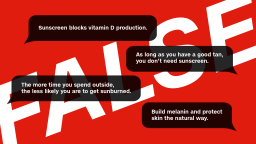
Social media’s message about the sun and sunscreen: ‘It’s frightening’
Sunscreens on US store shelves today excel at blocking the radiation that causes visible sunburns, called ultraviolet B rays. However, critics say they routinely fail to shield against deep-penetrating ultraviolet A, or UVA rays, which drive premature aging, suppress the immune system and are the primary contributor to skin cancer, according to the .
Peer-reviewed research by EWG has found US sunscreens deliver on average just 24% of the UVA protection implied by their sun protection factor, or SPF, labels.

However, BEMT is a chemical filter that provides adequate UVA protection, is not easily absorbed into the skin, and has the most robust safety data on any UV filter to date, said Alexa Friedman, a senior scientist at EWG.
“Bemotrizinol changes the calculus of sun care. It is highly photostable — meaning it won’t break down when hot summer sun hits your skin — unlike avobenzone, currently the only non-mineral filter in the U.S. that provides meaningful UVA coverage,” she said in a statement.
“Better yet, unlike the older non-mineral filters, it can be combined with zinc oxide to provide strong broad spectrum protection with less white cast,” Friedman said.
Read more Social Security retirement trust fund will run dry in 2032 unless Congress acts
A new, safer chemical sunscreen
Of the 550 sunscreen products recommended by EWG in their 2026 report, 497 are predominantly made from minerals that sit on the skin and physically deflect and block the sun’s rays. Because mineral-based sunscreens are not absorbed into the dermis, they cause little skin irritation or toxicity.
Chemical sunscreens, however, are designed to soak into the skin and work by creating a chemical reaction that absorbs ultraviolet radiation as energy, dispersing it as heat. A dozen types of chemicals were used for decades in sunscreens without concern. Then, in 2019, FDA scientists found six of the most commonly used ingredients could enter the human bloodstream at unsafe levels after only one day of use.

I tested 19 bug sprays. These 3 don’t feel gross or smell awful (Courtesy CNN Underscored)
Those chemicals then remained in the blood days after application stopped. In fact, two of the ingredients — homosalate and oxybenzone — stayed in the bloodstream above safety thresholds for more than two weeks.
“This is a great day for American consumers and everyone who has fought to improve sunscreen options and close the UVA protection gap in U.S. sunscreens,” said David Andrews, chief science officer at EWG, in a statement.
“For decades, Americans have used outdated sunscreen tech while the rest of the world moved forward. The approval of bemotrizinol will help change that,” Andrews added. “This is a win that has been a long time coming.”
Get inspired by a weekly roundup on living well, made simple. Sign up for CNN’s Life, But Better newsletter for information and tools designed to improve your well-being.