 By admin
A version of this story appeared in CNN’s What Matters newsletter. To get it in your inbox, sign up for free here.
Read more Russia and China are not America’s friends. Why does Trump think they are?
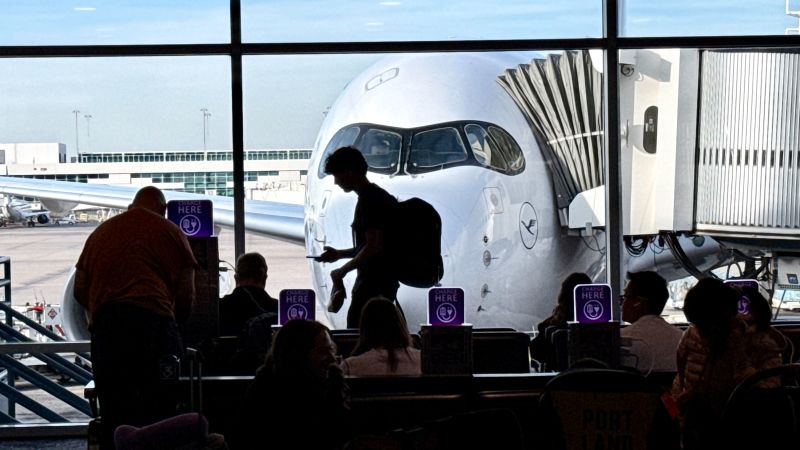
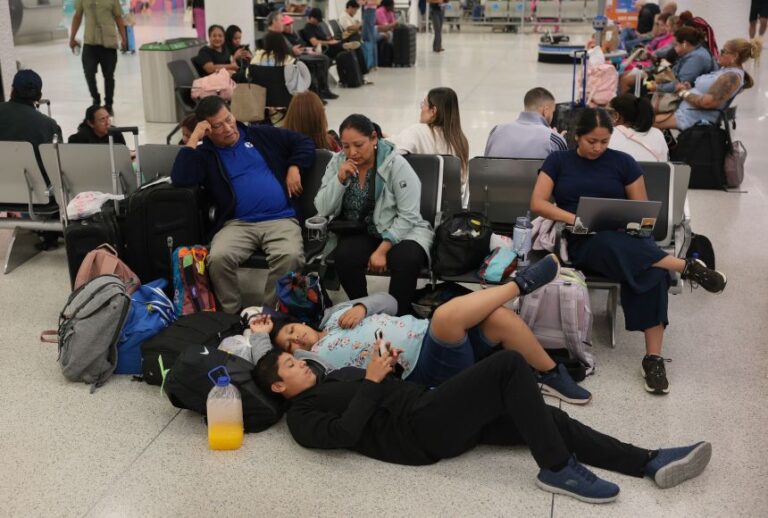
First the emails went down (Microsoft Outlook). Then the planes were grounded (the Federal Aviation Administration). A bank system was on the fritz (Chase Bank). Now a spy agency is having computer problems (the National Security Agency).
It doesn’t take paranoia to start connecting dots, even when there’s no indication any of these incidents are related. Poring over old news will yield the fact that water facilities were the target of cyber attacks in Minnesota, perhaps carried out by Iran, earlier this year.
After AI agents detected flaws in the PHP security language that’s behind 70% of the world’s internet infrastructure last month, UK Prime Minister Andy Burnham encouraged citizens to stockpile water and supplies to get them through three days in case of emergency.
News of every outage has a cascading effect that’s amplified on social media and by algorithms, as CNN’s Brian Stelter has pointed out. So if you start searching for news about glitches, you’ll start to see more news about glitches.
That’s assuming they are glitches: CNN’s John Miller, meanwhile, writes that it’s becoming harder to tell the difference between a glitch and a cyber attack.
There are also frightening threats that have nothing to do with the internet but are directly tied to instability in the world — CNN reported Monday that Iran has looked at its capability to detonate a dirty bomb in the US.
In September, Defense Secretary Pete Hegseth instituted a new preparedness scheme called that would, among other things, seek to make domestic US military bases more resilient and energy independent.
When the government conducted a long-planned test of its emergency broadcast capabilities on Tuesday — which was only a test! — it drove home the idea that we are all living in uncertain times. Never mind that the emergency broadcast test was scheduled for after Election Day to avoid launching conspiracy theories.
None of it is directly related, but all of it points to the perils of the reality that just about everything now relies on an internet connection.
Lawmakers are suspicious
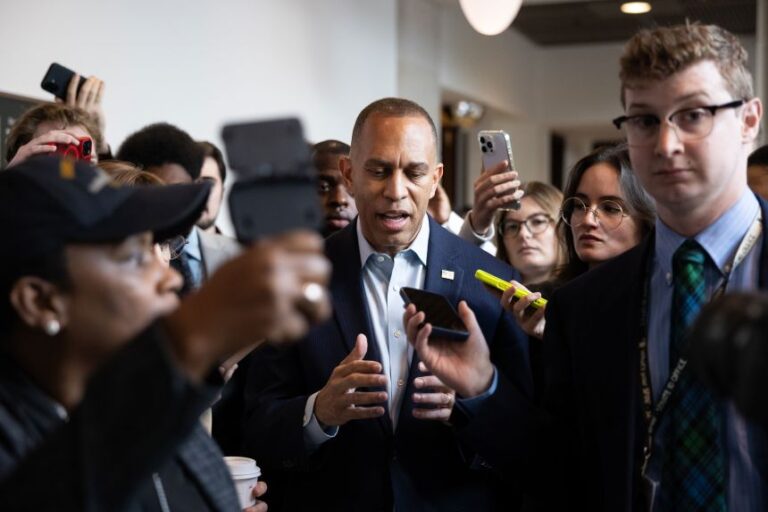
House Minority Leader Hakeem Jeffries, a Democrat, urged the Trump administration to brief lawmakers about the string of high-profile technology failings in the last week — from Microsoft to the nation’s intelligence communications server — and whether there are hostile actors involved, though no cyberattack has been acknowledged in any of the instances.
“We had the Microsoft incident, we had a nationwide ground stop. Now we have concerns as it relates to highly classified servers at the NSA. I think it’s time for the administration to come up to the Hill and explain themselves,” Jeffries said, calling for a briefing for House and Senate lawmakers of both parties on what the administration knows about the incidents.
And Sen. James Lankford of Oklahoma, a Republican, said on Fox News that the number of instances demanded an investigation.
“We can’t assume that this is a random glitch when you have so many things in a row,” Lankford said, noting that China is known to have penetrated the US telecom system.

Some Democrats want to work with Trump. Here’s where they might agree
Nothing to see here
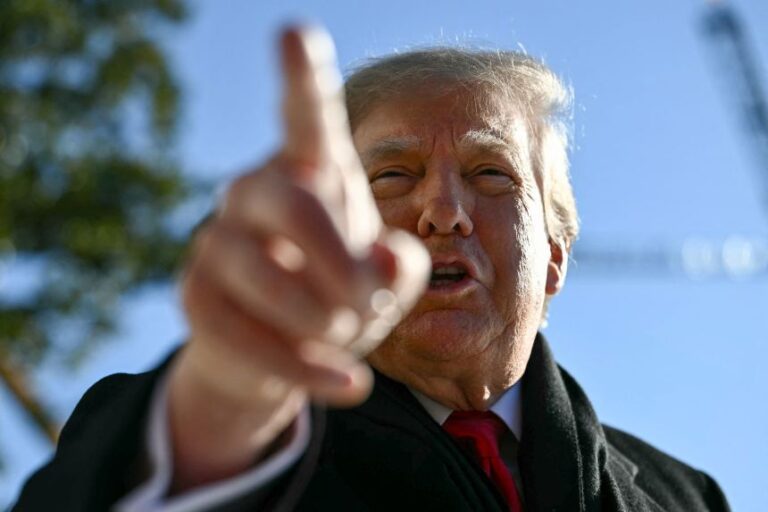
It doesn’t help that President Donald Trump built his political career around spreading conspiracy theories. But he sees no conspiracy this week on his watch.
“It’s life,” he told reporters Tuesday during a trip to the Philippines. “When you’re big and powerful and you have all the money, things like that happen. It’s fine.”
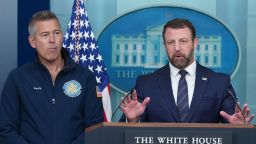
Trump administration dismisses crisis fears after string of disruptive tech outages
Read more If not Vance or Rubio, then who? GOP 2028 questions mount
Vice President JD Vance, a self-described conspiracy theorist in other contexts, now wants people to be calm, though he acknowledges some of his own acquaintances wonder what the heck is going on.
“A lot of my friends have reached out asking if they should prepare to build a bunker or stock up on food and water,” Vance said on Fox News Monday. “My answer to that is no. We don’t see a crisis coming down.”
Then Vance mixed up that message by adding, “But you have to be prepared for everything.”

Transportation Secretary Sean Duffy said Thursday he had asked a team of FBI agents to join the ongoing investigation into why exactly a router caused officials enough concern to order a ground stop. There’s still no evidence of anything nefarious, he said.
Homeland Security Secretary Markwayne Mullin was sufficiently unbothered by Friday’s nationwide ground stop that, as the commercial airline system was still recovering over the weekend, he felt comfortable boarding a government plane and heading to the Texas-LSU football game, where he appeared in the luxury box of the head of a company that last year was awarded a $2.2 billion DHS contract.
More likely incompetence than conspiracy
CNN contributor and tech journalist Jacob Ward cautioned against the idea that these disparate glitches are directly connected.
“Where most people see conspiracy, I almost always encounter incompetence,” Ward said Tuesday on CNN.
If there is a connection, it’s that the US is asking more and more of an aging infrastructure.
“And now when we just try and do something like a routine upgrade, we wind up skunking the whole system,” Ward said.
Add to that the capabilities presented by AI, for better and worse, such as when Anthropic’s warning that a Yemeni military cell was trying to build guidance systems for missiles with Claude.
“It doesn’t take as much technical expertise as it once did to do a lot of damage,” Ward said.
What caused the recent glitches?
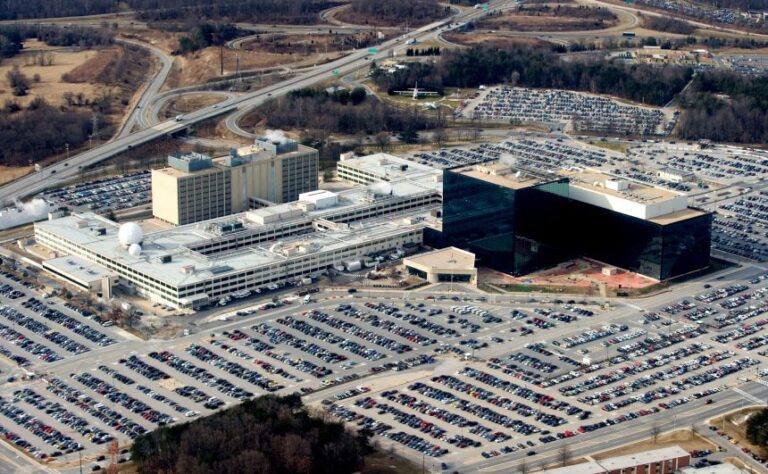
The NSA says that its outage does not appear to have been caused by a cyberattack, and that multiple built-in redundancies mean that “mission-critical capabilities” were not affected. The agency did stagger the arrival of employees to manage stress on the system Tuesday.
The FAA’s ground stop was tracked back to efforts to upgrade copper wire with fiber optic cable as well as a defective router in Arkansas that confused systems around the country.
An outage for some customers of Chase was written off by the company as a “software bug.”
Microsoft said its recent email outage was the result of a network capacity upgrade gone wrong.
Those explanations all seem plausible. They also seem unlikely to satisfy people whose feeds are inundated with doom.
Read more Navy won’t rename carrier slated to honor Black war hero after considering switching it to Trump