 By admin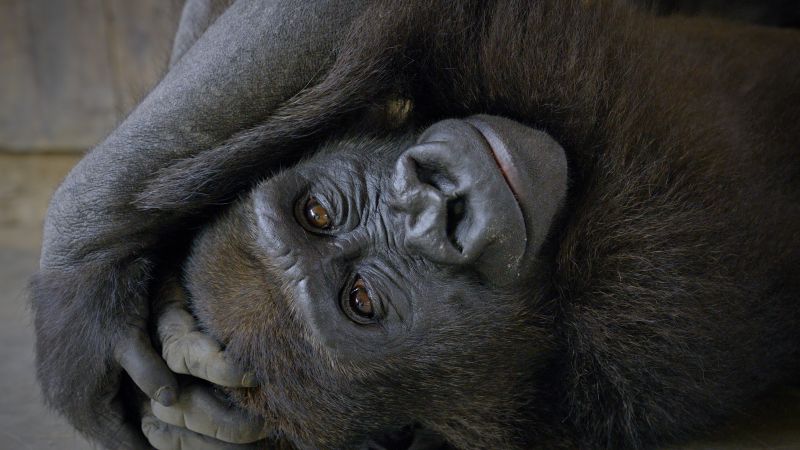
EDITOR’S NOTE: Call to Earth is a CNN editorial series committed to reporting on the environmental challenges facing our planet, together with the solutions. Rolex’s Perpetual Planet Initiative has partnered with CNN to drive awareness and education around key sustainability issues and to inspire positive action.
Read more Abdul El-Sayed disavows Muslim Brotherhood and criticizes implications that he has ‘dual loyalty’
If Bili the western lowland gorilla was nervous, she wasn’t showing it.
Moments before, the ape had been released into an enclosure at the Tchimpounga Nature Reserve in the Republic of Congo. She raced out in the open, before reaching for a human carer, who carried her into the forest. As soon as she was lowered to the ground, the ape set off again, climbing trees and plowing through the undergrowth. This wasn’t a return to the wild — yet — but it was as close to her natural habitat as she’s seen since she was wrenched from her home three years ago. Bili appeared ready to make up for lost time.
This is the story of an illegal $20 billion trade, told through the eyes of one scared young animal.
Experts are uncertain where Bili came from. She could have been born in Cameroon, Gabon or the Republic of Congo. It is highly likely that many members of her family, if not all, were slaughtered to capture the infant tosell her into the exotic pet trade. What is certain is that she has lived nearly all her life in a rescue center in southern Nigeria.
Bili was a few months old when she was intercepted by Nigeria Customs Services Special Wildlife Office in Lagos in August 2023, following an undercover operation in partnership with Focused Conservation, a nongovernmental organization. Investigators posed as buyers in a sting that resulted in the arrest and conviction of two men for conspiracy, unlawful possession and the attempted sale of a gorilla.
Peter Jenkins, the American co-founder of primate protection nonprofit Pandrillus, remembers receiving the call from customs. “They didn’t know what to do with her really, or how to care for her,” he recalled. “They sent me a picture of her sitting on the floor, looking about as pathetic as a baby gorilla can look.”
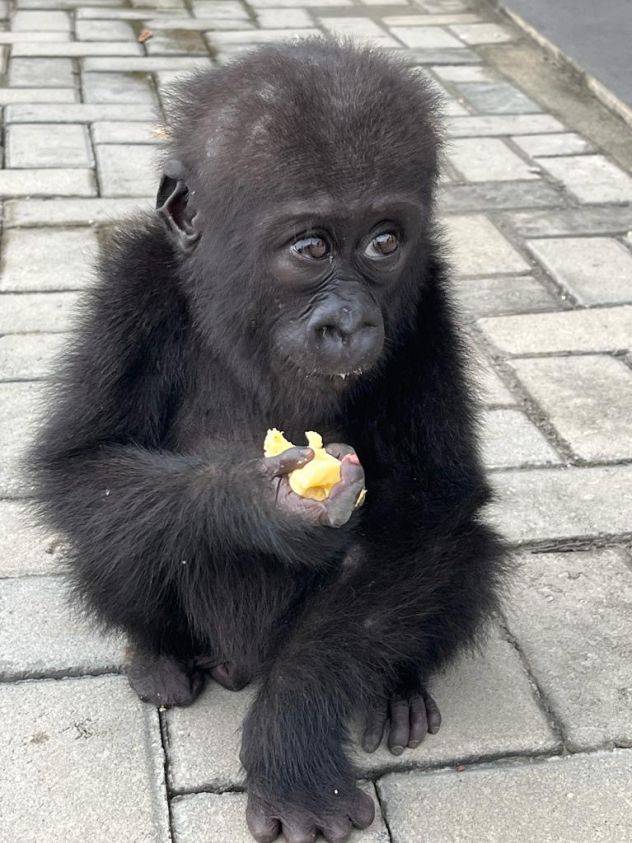
Jenkins took Bili to Drill Ranch, Pandrillus’ wildlife rehabilitation center in Calabar, Cross River State, which borders Cameroon — a region known for its primates. She was unwell and covered in a fungal infection, recalled primatologist Lindsay Maess, who cared for Bili at the center. Yet Bili was a “miraculous case,” she added, noting “upwards of 80% of trafficked gorillas don’t survive.”
Maess explained that trafficked infants go without mother’s milk containing antibodies, and miss out on other elements of their natural diet, including foliage that treats parasitic infections. They are extremely vulnerable to illness. Some stop eating and collapse from emotional distress. The morning of our interview, a recently seized infant gorilla called Maraya had died, despite the efforts of Maess, three veterinarians and a nurse. “Just when you think they’re doing okay, they tank — and they tank so fast,” she said. “This is the sad reality of ape trafficking.”
How this conservationist fought to bring an elusive monkey back from the brink of extinction
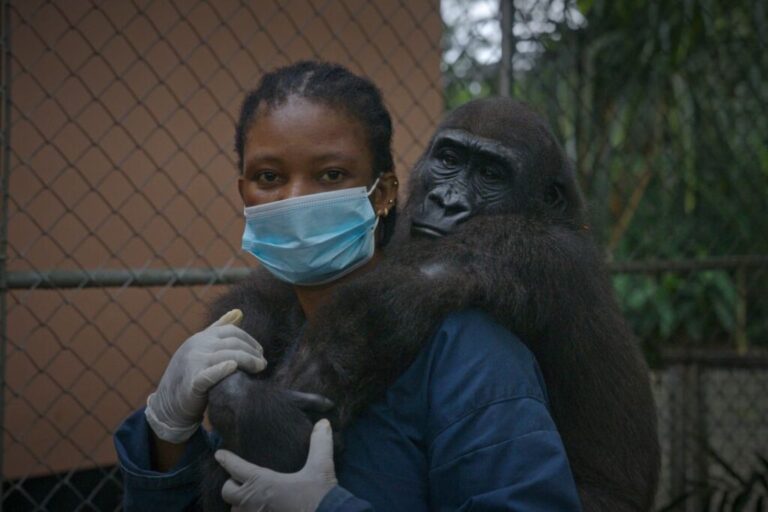
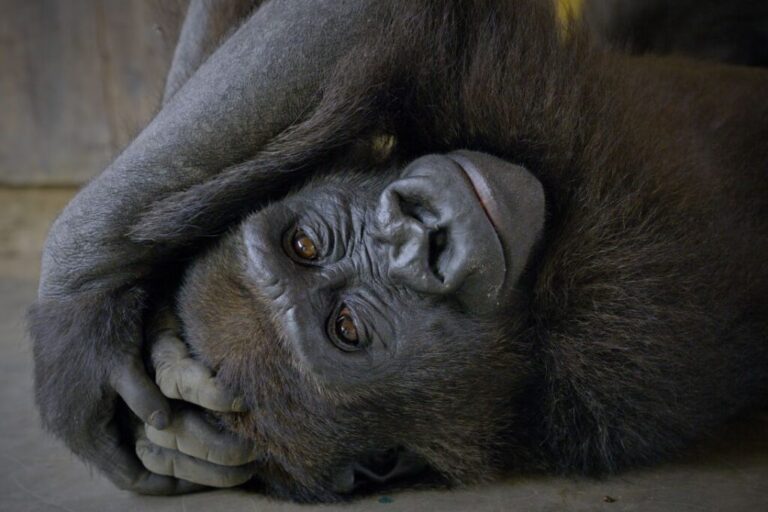
Bili’s trauma ran deep. She would scream at the sight of a box or cage, and slept clinging to Jenkins’ body for the first three months. “She was very young and needed that security — being loved,” he said.
She shared an enclosure with Brendan and Mili, two chimpanzees who themselves had been seized from traffickers. The outgoing chimps were “probably the best thing for her” and “got her out of her shell,” said Maess.
But despite Bili’s newfound security, Jenkins knew from day one they would need to find her a forever home.
Breaking a $20 billion illegal trade
Orphaned gorillas were once a byproduct of the bushmeat trade, but today infants are more likely to be targeted for trafficking, said Danny Murphy, a technical adviser for Focused Conservation.
Focused Conservation is a US-based nonprofit staffed by former law enforcement officers specialized in organized crime. It is funded by the US Bureau of International Narcotics and Law Enforcement Affairs, explained Murphy, not because the US is a hotspot for trafficked wildlife, but because wildlife trafficking within Africa “funds insurgency, which does negatively impact Western interests.”
The nonprofit works to uncover wildlife trafficking networks. Buying and selling is often conducted on the open web and people will “blatantly” advertise animals, Murphy explained, given the perception of it as a “low-risk, high-gain” crime.
Nigeria is a key station for wildlife leaving the continent; dead animal goods typically leave by ship, live animals by air, he said.
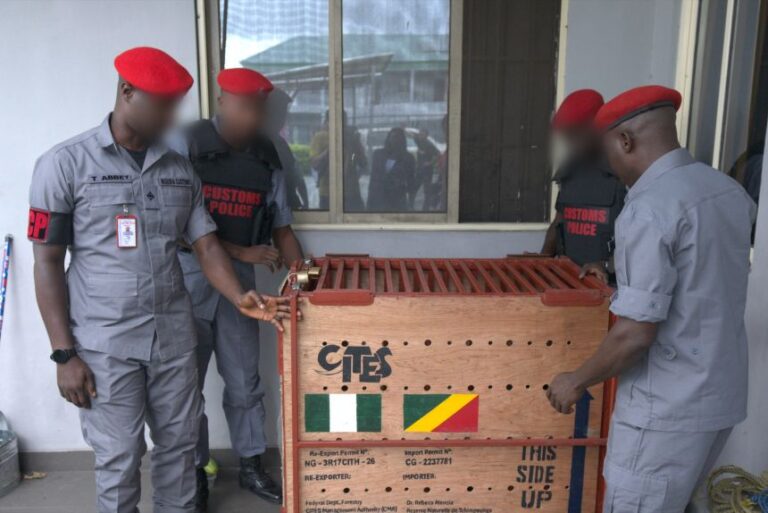
Recently the country has outlined a to combat wildlife and forestry crimes through increased law enforcement and education of the judiciary. In 2021, customs established the Nigeria Special Wildlife Office (SWO), an investigative unit operating in partnership with Focused Conservation. It was this partnership that led to Bili’s seizure.
Read more Astronomers say they’ve discovered the first green star
Most buyers of baby gorillas appear to be based in the Middle East and Asia said Patricia Raxter, director of intelligence and analysis at United for Wildlife, a program combatting illegal wildlife trafficking and part of The Royal Foundation, a philanthropic organization led by the Prince and Princess of Wales.
“We’re seeing this massive acceleration in the trade in great apes,” Raxter said. “The exotic pet trade period is really exploding, and I think part of that is driven by social media.”
Interpol estimates the annual value of wildlife crime is $20 billion. Between September 15 and October 15, 2025, a global crackdown coordinated by the agency and the World Customs Organization seized almost 30,000 live animals, including more than 200 primates.
Putting seized apes on a path back to the wild is expensive for cash-strapped conservation organizations.
Caring for an infant gorilla for three years can cost “thousands of dollars on milk alone,” said Zack Schwenneker, project manager at Drill Ranch.
“Seizures are great — and it’s a success — but the sanctuaries that end up caring for the animals end up bearing all of the costs,” he said. Schwenneker added that large international grants for wildlife trafficking enforcement “never include post-seizure care costs.”
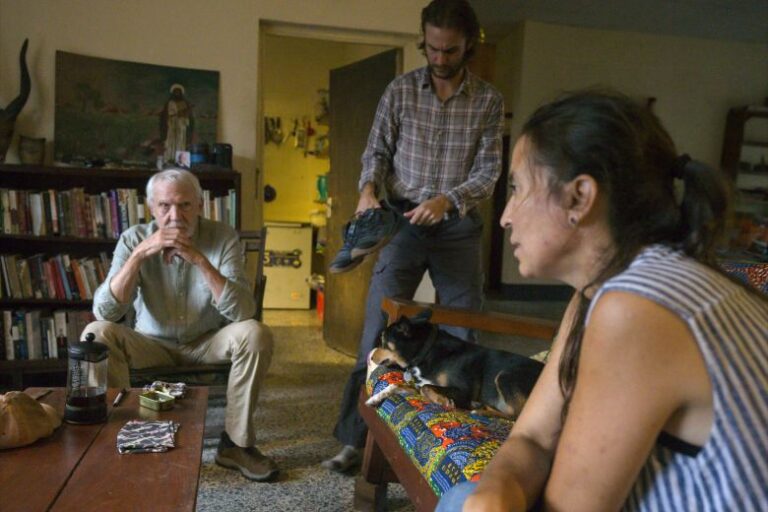
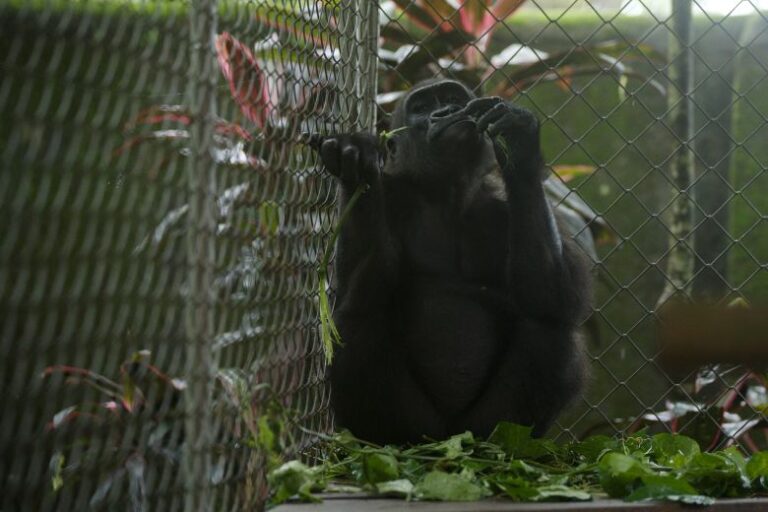
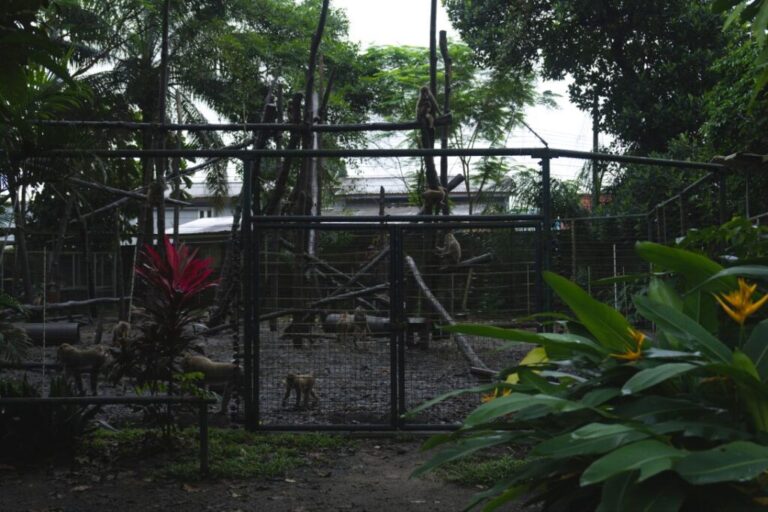
Pandrillus looks after nearly 700 animals, said Jenkins, and has experienced a rise in new additions since the formation of the SWO. Maess, who has since left Pandrillus and now works as an advisor for Focused Conservation, said Nigeria’s rescue centers are at “max capacity.” Bili, she added, had been ready for a new home “for quite some time.”
Speaking to CNN in September, Jenkins said he was relieved the gorilla was leaving for a larger sanctuary, even if he described it as “way down the list of great outcomes.”
“That animal belongs with its parent in the forest,” he said. More needs to be done, he argued, to end wildlife trafficking by protecting animals in the wild — whether from hunters, traffickers or other detrimental activities like logging. “I’ve been here for 38 years watching this happen and (I’m) just generally very angry at what’s being allowed to transpire,” he said.
“We’re not having success … it breaks my heart,” he added.
The long journey back to the wild
United for Wildlife helped coordinate Bili’s relocation with Pandrillus and Focused Conservation; an operation also involving Nigeria’s Ministry of Environment and Department of Forestry, and the Congo Ministry of Forest Economy.
Ahead of the journey, the team at Pandrillus spent weeks making Bili comfortable with being confined again. Then on September 21, Bili left Calabar on a 20-hour road trip to Lagos, beset by a breakdown and delays. Two days later she was flown by DHL to the Republic of Congo, before being transferred overland to Tchimpounga, a primate rehabilitation center operated by the Jane Goodall Institute north of the port city of Pointe-Noire.
Dr. Rebeca Atencia, executive director of the Institute in the Republic of Congo and head veterinarian at the center, traveled with Bili and oversaw her introduction. “Bili has adjusted very well,” she told CNN. “She has shown herself to be a very resilient young gorilla.”
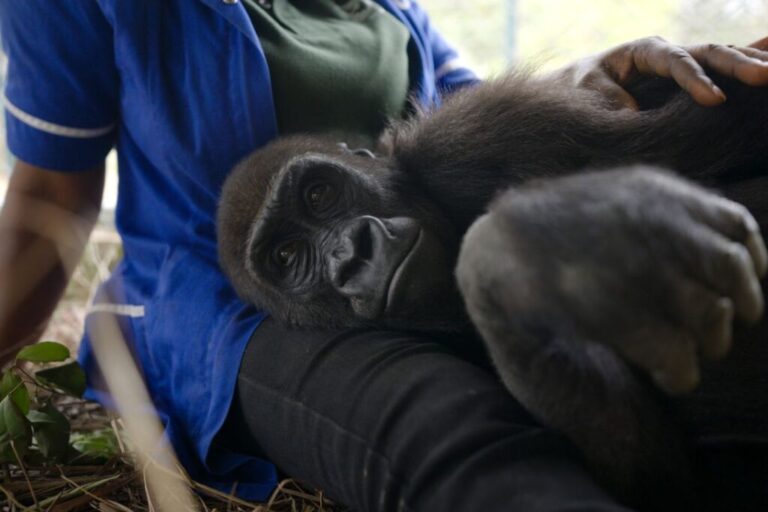
Bili has already embraced her new life at the Tchimpounga Nature Reserve, which features indoor and outdoor enclosures spanning forest and savannah. Once the gorilla completes a 40-day quarantine and passes health checks, she will be introduced to a younger female gorilla called Mozambique already living at the sanctuary, with whom she can develop her social and behavioral skills.
If all goes well, she could be moved again, along with Mozambique, to the Lesio-Louna Reserve in the Republic of Congo, a 173,000-hectare protected area managed by The Aspinall Foundation and the Ministry of Forest Economy.
“The hope is that, in time, this group will have the opportunity to progress through the rehabilitation and reintroduction process and ultimately return to a life in the wild,” said Dr. Atencia.
“They will have,” she said, “a second chance at a normal life.”
This story has been amended to clarify details around the exotic pet trade.