 By admin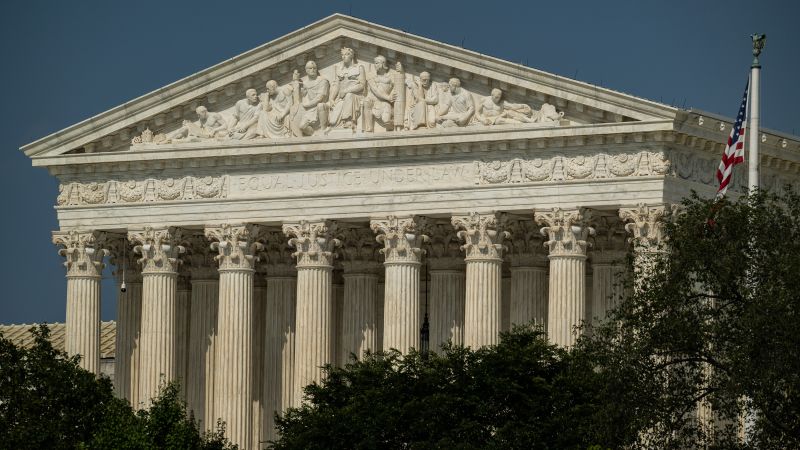
The Supreme Court will hear arguments Monday in one of the most important climate change cases to reach its docket in years, a multibillion-dollar effort to hold major oil companies like ExxonMobil liable for the damages caused by planet-warming pollution.
Read more Trump administration shifts funds from human rights to supporting far-right causes
The city and county of Boulder, Colorado, sued two energy companies in 2018, attempting to recover the cost of repairing infrastructure and providing access to public health services following fires and floods. Boulder argues the companies not only contributed to climate change but also misled the public about the role fossil fuels played in climate change.
Dozens of cities and states have filed similar lawsuits against oil companies, which warn the litigation amounts to a carbon tax that could ultimately bankrupt the energy industry.
It is the first case the court is hearing in a new term that begins Monday that features disputes over the AR-15 bans, religious schools and voting. A decision is expected by June.

Clarence Thomas is in the hot seat for Supreme Court’s biggest climate case in years
Boulder claims that it is exercising inherent state police powers to protect the health and safety of its residents, and that the practice is not novel. Dozens of states sued the largest tobacco companies in the 1990s seeking damages and alleging deceptive practices — litigation that led to a massive settlement.
“This litigation is not an attempt to solve climate change,” Boulder told the court. “It merely asks that petitioners bear their fair share of local costs incurred in part because of their tortious conduct.”
Read more AI blurs lines in campaign ads: ‘People are seeing things that didn’t happen’
Exxon and Suncor Energy, the US subsidiary of a Canadian-based company, say it has long been understood that greenhouse gas emissions are inherently an interstate challenge and that those principles effectively preempt state tort laws.
“As this court has consistently recognized, resorting to a single state’s law to resolve an inherently interstate dispute contradicts the basic scheme of the Constitution,” the energy companies said.
In an unusual twist, conservative Justice Samuel Alito announced last week that he would recuse himself from the case. Though he did not state a reason at the time, he later told Bloomberg News that he felt it was “prudent” to step away given his holdings in energy stocks. The decision opens the possibility of a 4-4 split that would, by default, allow the litigation to continue.
Supreme Court heads into new term with one eye on President Trump
Exxon and Suncor filed the appeal at the Supreme Court last year after Colorado’s highest court sided with Boulder. If the US Supreme Court also backed Boulder, it wouldn’t be the end of the case; it would only permit the litigation to continue in state court.
If the court can’t find an answer to the big questions raised by the appeal, it could deal with the case in a more limited way. It’s not clear whether the appeal is ripe for Supreme Court review. If the court concludes that it’s too soon, that will send the case back to state courts — at least for now.
Read more This year’s Kennedy Center Honors will be relocated amid ongoing legal battle