By admin
Our featured picks
For sleeping
North Coast Medical Norco Nite-Nite Neutral Wrist Support
Best budget option
ComfyBrace Nighttime Wrist Brace
For all-over support
Push Med Wrist Brace
Finding the best carpal tunnel brace to manage wrist pain might seem simple — after all, many medical wraps look the same — but there’s a Goldilocks design for everyone that best supports your anatomy and needs; you just have to know what features to look for.
Read more White House airs another government-funded ad, this time with Trump warning of ‘final battle’
“If it is too flexible and you can flex your wrist through the brace, it will defeat the purpose of the brace,” Dr. Jeffrey Yao, a professor of orthopedic surgery and director of Stanford’s Hand and Upper Extremity Surgery Fellowship, said. “If it is too hard and uncomfortable, you will probably abandon it. Find the brace that is just right.”
Yao said the trick behind finding the proper balance of flexibility and structure is ignoring marketing jargon like “lighter,” “low profile,” or “easier to wear” and instead focusing on the advice health and wellness experts offer. That’s why I asked certified hand therapists for some support. They took me by the wrist and explained how to determine the proper rigidity, fit and wrist position of your ideal brace. Plus, they recommended models they entrust their patients with. So, if you are among the 10 million Americans who have carpal tunnel or are looking for some more hand support, this is where you should start.

Related article I found the 2 best ergonomic mice that keep me comfortable while I work
Best braces for carpal tunnel
Hely & Weber Titan Wrist Brace
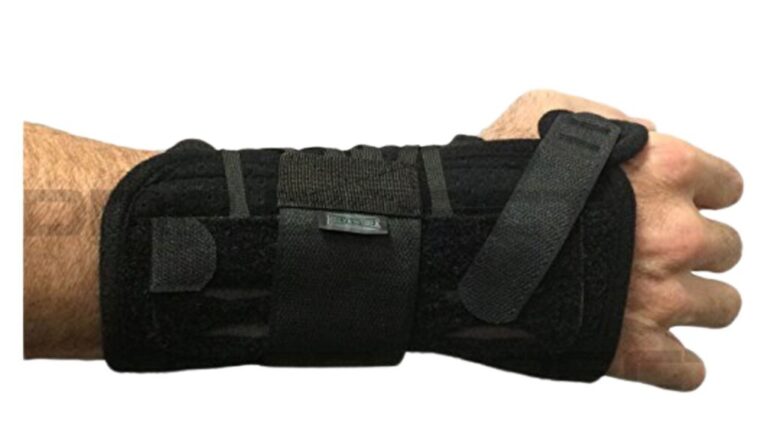
“My top recommendation for a carpal tunnel splint is the Hely & Weber Titan wrist brace,” Rae Cowan, an occupational therapist and certified hand therapist at OrthoArizona, said. “I usually say ‘one size fits no one’ when it comes to prefabricated splints, but because this splint is so adjustable, it can fit a wide range of people.”
The brace’s flexible dorsal and volar stays (rigid straps along the front and back of the hand) allow you to reposition and reshape the support systems as you desire. “This allows for a neutral wrist position, which is preferable for a carpal tunnel diagnosis versus [the] wrist extension in which many splints come in,” Cowan said.
This neutral position is where the wrist should rest for carpal tunnel syndrome treatment, according to Dr. John Fowler, a board-certified orthopaedic surgeon and professor in the Department of Orthopedics at the University of Pittsburgh School of Medicine. He cautioned that both wrist flexion and wrist extension can increase the pressure inside the carpal tunnel.
Taking the Goldilocks allusion further: The Hely & Weber brace comes in three lengths, with separate options for the left and right wrists.
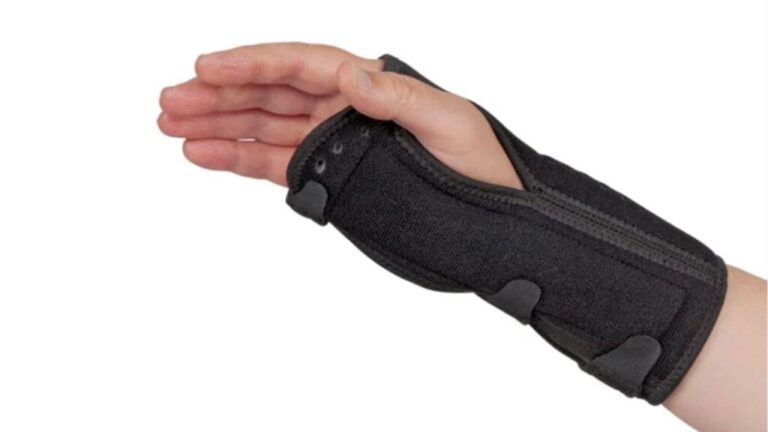
North Coast Medical Norco Nite-Nite Neutral Wrist Support
Flexibility is one thing, but any carpal tunnel brace that gives your hand full freedom is a red flag. In fact, Stella Wang, a senior occupational therapist and certified hand therapist at Kaiser Permanente Santa Clara Medical Center, said she doesn’t recommend models that allow patients to make a full fist.
Similarly, Janet Sanders, a certified hand therapist and owner of Sanders Therapy Group, said one of the biggest errors in carpal tunnel syndrome splinting is leaving the fingers free. This is because patients can then “sleep with fingers flexed in the position of flexor tendon aggravation or median nerve aggravation within the [carpal tunnel].”
That’s why Wang recommends the Norco Nite-Nite brace — especially for use after the lights are out. Wang said it’s a “slightly longer” and “slightly bulkier” brace than others, but notes that it “prevents the patient from making a fist while keeping the wrist neutral.”
Wang said she likes that the Norco works on either hand, so you don’t have to commit to separate left- or right-handed models. However, she wouldn’t recommend it for someone who only needs light support or is “very opposed to having a snug fit.”
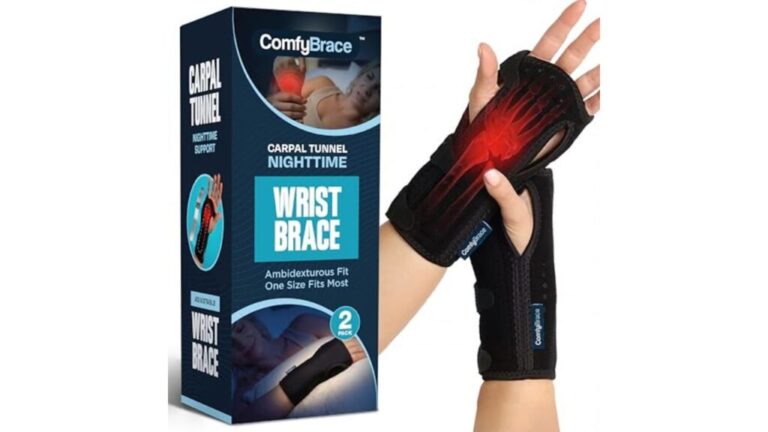
ComfyBrace Nighttime Wrist Brace
Cheap carpal tunnel braces solve one problem by creating another: They’re easier on your wallet, but sometimes too easy on your wrist. Wang’s budget pick doesn’t prioritize the former over the other. The ComfyBrace, she said, has a mostly soft construction with “a metal piece on the wrist side,” and is designed for “nighttime wear to maintain the wrist in neutral position with fingers open.”
And the ComfyBrace doesn’t pack on heft to get there. Wang described it as “not too bulky” and called it her “overall affordable and comfortable pick” for nighttime wear; however, she doesn’t recommend the style for people who need more support.
Those looking for pure value, though, have something more to jump at: The ComfyBrace comes as a two-pack, and Wang noted either can be worn on the left or right wrist.

Related article Why posture during movement matters more than how you sit or stand
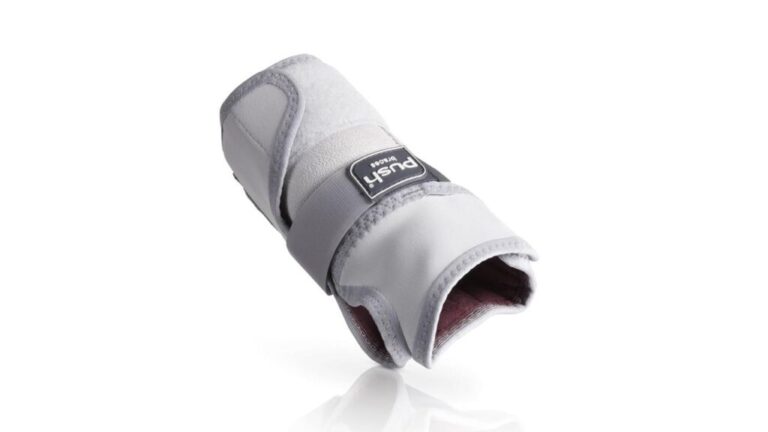
Push Med Wrist Brace
Michele Milano, an occupational therapist and certified hand therapist at Hand + Physical Therapy NYC, said her top pick is the Push Med Wrist Brace. “It’s really one of the only ones that provides support for both dorsal and volar [sides] to maintain the wrist in neutral.” In layman’s terms: The brace doesn’t rely on one rigid strip to keep the back or palm sides of the hand in line, but supports both.
Additionally, Milano likes the brace’s quality materials, the comfort it offers and the size variety. While the Push Med is “a little bit more rigid and bulky through the wrist,” she said it “fits well and doesn’t have a metal bar digging into you.”
Brownmed Imak Pil-O-Splint Wrist and Hand Support
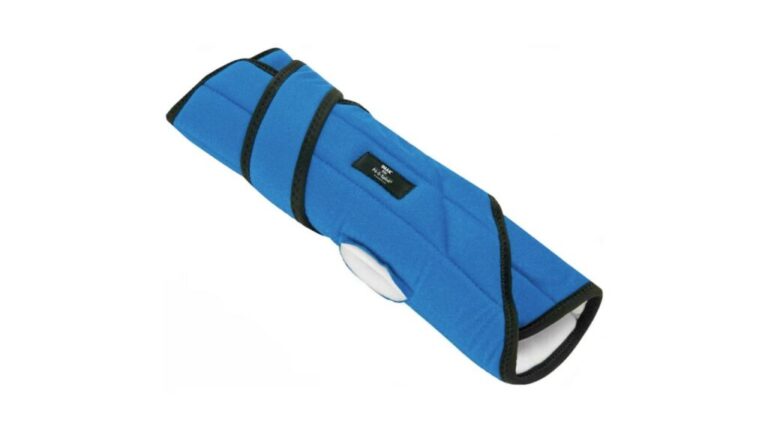
The Pil-O differs from most braces: It doesn’t stop at the wrist but creeps farther down the hand. By doing so, it keeps the fingers straight, which is exactly what Sanders wants from a nighttime carpal tunnel splint. “The use of the Pil-O wrist and hand support is the most effective initial treatment of median nerve compression at the carpal tunnel,” she said, referring to the numbness, tingling and burning in the hand and fingers that people with carpal tunnel typically experience.
It diminishes these side effects by teasing the hand into “the best wrist position of 0 degrees — neutral wrist — to 10 degrees of extension, with the fingers in full extension to create excursion of the flexor tendons and change the differential position and pressures in the carpal tunnel,” Sanders said.
That finger position can take some getting used to, but Sanders said this night positioning is the “best initial splinting for the best effect on the nerve” because it reduces median nerve compression quickly and is easy to maintain. Throughout the splinting, she said the nerve can feel less aggravated, and the flexor tenosynovitis can resolve.
Breg Wrist Lacer Wrist Brace
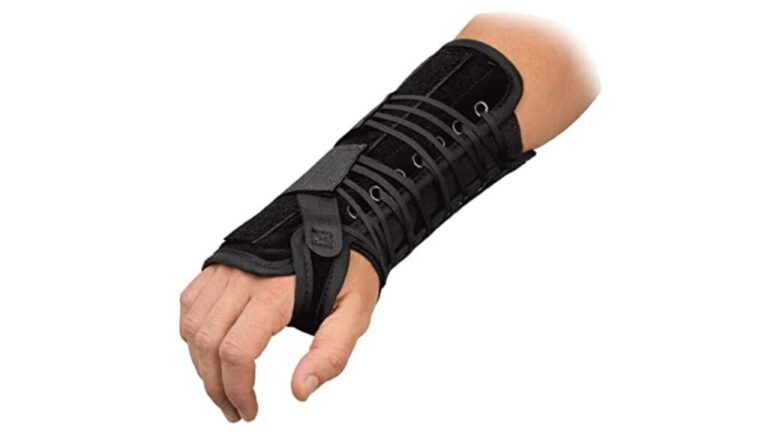
The Breg Wrist Lacer Wrist Brace doesn’t fit into the standard small-medium-large size box. Instead, it comes in two lengths — an 8-inch or 10-inch — and five different widths. All these options mean you’ll hopefully find a stellar-fitting style that’s comfortable and effective.
Though the brace’s dorsal stay isn’t movable, Cowan said you can shift the volar stay along the palm to place the wrist in a neutral position — or remove it entirely. Once everything is where it should be, you’ll have no problem putting it back on, thanks to its one-strap design, Cowan said; the lacing system tightens the brace in one pull instead of making you work your way through a row of separate straps.
“The best part of this splint is that the company allows the patient to schedule a phone or a virtual session with a fitting professional to ensure proper wear of the splint,” Cowan said, also noting that the company has fitting videos that are a little more useful than the little folded instruction sheet usually tossed into a brace box.
These instructions can be especially helpful, given the Breg extends several inches up the forearm and uses a rigid palm-side stay to control the wrist. It also cinches down throughout its lacing system, so getting the placement right affects more than whether the Velcro feels snug.
Futuro Deluxe Wrist Stabilizer
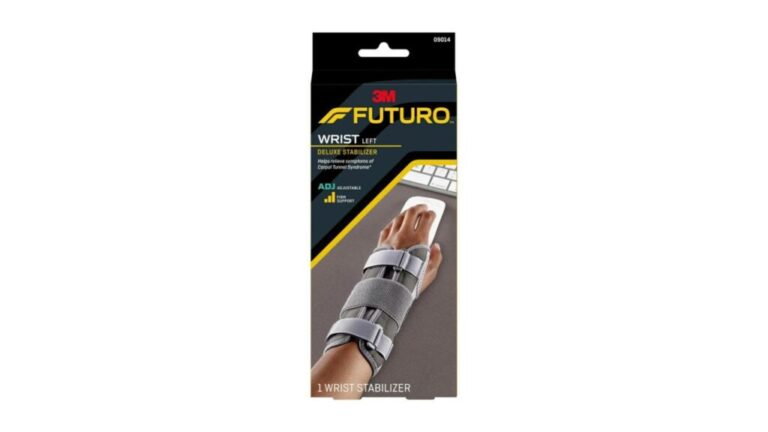
Cowan said the Futuro Deluxe Wrist Stabilizer is a good option available at most pharmacies and grocery stores. “Having a local option is nice because you can try the product on in store before purchasing to ensure a good fit,” she said, adding that the proximity can also be beneficial in emergency instances when you need relief faster than a typical delivery window allows.
The sizing is relatively simple — S/M and L/XL — so being able to actually put one on before buying it carries a little more weight here than it would with a brace offering a half dozen incremental sizes.
The Futuro has a simpler structure. In fact, Cowan said its two dorsal stays line up near the radial and ulnar styloids — the bony points on either side of the wrist — and “can cause skin irritation.” Under the palm, meanwhile, there’s no volar stay, “only a foam pad,” which Cowan said provides “considerably less support” than the Titan or Breg.
That lower level of support sets a pretty clear boundary around what she’d use it for. Cowan would not recommend the Futuro for “heavy work” or activities involving impact through the hand. So while its availability is the obvious reason it lands here, our big point is helping you know what you’re buying: an easy-to-find, easy-to-try-on brace that Cowan sees as a lighter-duty option, not a substitute for the more supportive models above.
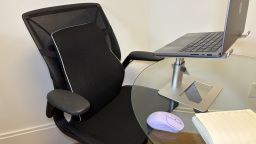
Related article The best lumbar support pillows to relieve lower back pain, per spine experts
How to choose the best carpal tunnel brace
Don’t overextend your wrist
First and foremost: Note where the brace parks your wrist. Bending the wrist increases pressure, according to David Ring, a professor in the Department of Surgery and Perioperative Care at Dell Medical School at the University of Texas at Austin. Because of this, the experts I spoke with recommend keeping the wrist in only a slight extension to keep pressure off the nerve.
Rigidity matters
A carpal tunnel brace needs to be sturdy enough to keep the wrist in the correct angle. “That can be accomplished by either a metal bar or a mold, but it should not be flexible,” Fowler said.
Andy Fata-Chan, a physical therapist and strength coach at Moment Physical Therapy and Performance, said braces can be “more flexible during the day to provide some support and allow you to utilize your hands,” but noted that what you wear at night should be semirigid to rigid “because you want to maintain that neutral position in your sleep, and it can prevent the wrist from being in awkward positions as you shift at night.”
You can test rigidity by pushing against the brace — if your wrist bends, all that padding and Velcro likely isn’t adding much support.
Get the fit right
“The brace should fit snugly without overtightening the straps,” Yao said. “If the brace is too tight, it will be uncomfortable and even lead to swelling and worsening of tingling within the fingers.”
Fata-Chan gave a useful checklist. “If your hands start to throb, experience an increase in symptoms because of compression or change color — usually [becoming] pale — then you likely have a brace on that is way too tight,” he said. “The brace is too loose if it moves around as you move around.”
Sizing alone doesn’t guarantee the thing is sitting correctly. Milano said poorly fitted off-the-shelf braces can immobilize joints that don’t need it — or fail to hold the wrist correctly if they aren’t fully secured.
Pay attention to padding, edges and sweat
The rigid part of the brace should stop at your wrist, not dig a trench into it. “The rigid stay is important, but fashioning the fabric and material around the rigid stay with soft, comfortable materials — foam, gel, neoprene, etc. — will provide more comfort for overnight use,” Yao said.
Then there’s sweat. “If you are doing something that is strenuous or you’ll be in an environment where you’ll be sweating more, then you want more breathable material,” Fata-Chan said. “The biggest problem here is that moisture can make your skin more prone to irritation and also pressure from the brace.”
Yao takes breathability seriously for another reason: “If it’s not comfortable, the patient won’t wear it and won’t benefit from the purpose of the bracing,” he said.
Know when an off-the-shelf brace isn’t fitting
Most people don’t need a custom splint; however, Yao said custom models are useful for patients for whom the standard three sizes of off-the-shelf braces — small, medium, large — don’t fit.
Fata-Chan uses comfort and symptom relief as the test. “You should look for a custom-fitted splint when you cannot find anything over the counter that feels comfortable or provides you with relief,” he said. “Mass-produced splints might not account for unique anatomical variations, and that is where a custom splint can be very helpful.”
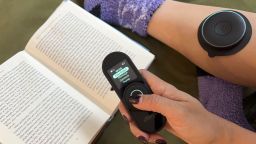
Related article I finally found an at-home device that alleviates pain from my arthritis in just 20 minutes. Here’s how it works
FAQs
Carpal tunnel braces work in that they “manage symptoms,” according to Ring. He said a splint can alleviate symptoms for years, but advanced nerve damage can become permanent, so symptom relief from a brace should not be confused with proof that the nerve is fine.
Yes, you should wear a carpal tunnel brace while sleeping. In fact, the splint can control wrist positioning better while you’re asleep and not consciously controlling it yourself.
You can sometimes wear a carpal tunnel brace while working or typing, but a rigid nighttime brace can interfere with those movements.
“A rigid splint can limit your ability to function in your daily tasks, or it might make it uncomfortable to do simple things like type on a computer,” Fata-Chan said. “You can change your ergonomic setup to make the wrist more neutral and use a more flexible brace during the daytime.”
A carpal tunnel brace should be snug enough to stop the wrist from bending but loose enough that circulation and sensation in the hand remain normal.
Fowler said it should be “snug enough to block wrist flexion and extension but not so tight that the fingers swell or turn colors.”
Experts disagree on whether a carpal tunnel brace should keep the fingers straight, and that disagreement explains why the braces in this guide look so different.
Yao prefers braces that leave the thumb and fingers free. Sanders takes the opposite approach, especially for nighttime splinting, and wants the fingers held and extended. Wang similarly favors nighttime designs that prevent the hand from curling completely into a fist. As always, you should consult your doctor to determine the best option for your needs.
A standard carpal tunnel brace controls the wrist, so it might not help with thumb pain.
“If the movement of the thumb or fingers does not exacerbate the symptoms, then you can proceed with a carpal tunnel brace that does not limit its range of motion,” Fata-Chan said. If the thumb itself is the thing that hurts — rather than numbness or tingling associated with carpal tunnel syndrome — don’t assume that immobilizing more of the hand automatically makes the brace better.
Most experts recommend wearing a nighttime carpal tunnel brace for several weeks before determining its effectiveness — assuming symptoms aren’t severe enough to require earlier evaluation.
“We typically recommend at least four weeks of nighttime bracing to evaluate its efficacy,” Yao said. Fata-Chan said improvement may start earlier. “People may experience decreased numbness and tingling within the first few days and more relief in two to six weeks,” he said. “If symptoms do not improve within six weeks, then a follow-up with your primary care provider is warranted to explore other options.”
According to the experts I spoke with, you should see a doctor about carpal tunnel symptoms when numbness becomes persistent, hand strength declines, symptoms aren’t improving with bracing or you develop new neurologic symptoms.
Meet our experts
For this article, we consulted the following experts for their professional insights:
- Rae Cowan, occupational therapist and certified hand therapist at OrthoArizona
- Andy Fata-Chan, physical therapist and strength coach at Moment Physical Therapy and Performance
- Dr. John Fowler, board-certified orthopaedic surgeon and professor in the Department of Orthopedics at the University of Pittsburgh School of Medicine
- Michele Milano, certified hand therapist at Hand + Physical Therapy NYC
- Dr. David Ring, board-certified orthopedic surgeon, professor and associate chair for faculty academic affairs in the Department of Surgery and Perioperative Care at Dell Medical School at the University of Texas at Austin
- Janet Sanders, hand therapist and owner of Sanders Therapy Group
- Stella Wang, senior occupational therapist and certified hand therapist at Kaiser Permanente Santa Clara Medical Center
- Dr. Jeffrey Yao, professor of orthopedic surgery and director of the Hand and Upper Extremity Surgery Fellowship at Stanford University Medical Center
Why trust CNN Underscored
CNN Underscored editors and writers ensure every product included in an article is thoroughly vetted and something we ourselves would feel comfortable buying and using. Our team has many decades of collective experience researching, testing and recommending products across every category — from fashion and food, to home goods and health, to electronics and everything in between — and we’re committed to using that expertise to help you make the most of your money and live a better life.
For this article, CNN Underscored contributing writer and former deputy editor Scott Simone consulted hand surgeons, physical and occupational therapists and certified hand therapists to find the best carpal tunnel braces.
Want the latest discounts?
CNN Underscored scans thousands of products every hour, so you don’t have to.
See latest discounts
Scott Simone is a contributor and former deputy editor at CNN Underscored. He was previously managing editor at Hearst’s BestProducts.com. In his decade-plus career, he has written and edited thousands of product reviews and guides on a range of products, from blenders to smartphones.
Read more Blanche says ‘one-sided news’ is a national security issue worthy of barring press
Latest Articles
-
The best carpal tunnel braces, according to hand specialists
-
The best walking canes of 2026, according to mobility experts
-
25 under-$50 kitchen tools at Amazon that professional chefs swear by
Explore trending products
Marycele Candle Warmer Lamp
Read our review
Optase Hylo Relief Eye Drops
Hyperice Venom 2 Back Wrap
Refresh Optive Mega-3 Eye Drops