 By admin
It should surprise nobody that the president who tried to overturn the 2020 election based on lies — and didn’t seem to mind his supporters rising up violently on January 6, 2021 — might try to monkey with the 2026 midterm elections.
Read more US military carries out new strikes on Iranian targets
It remains to be seen whether President Donald Trump’s efforts to interfere in the 2026 election will actually work.
But recent developments should serve as a reality check that he’s trying, with potentially ugly results.
First, CNN reported exclusively that the Department of Homeland Security is surging efforts to find supposed voter fraud in a handful of states.
While that might not sound shocking in and of itself, there is plenty about it that’s irregular.
The effort involves using an arm of Immigration and Customs Enforcement called Homeland Security Investigations, which typically handles other crimes like human trafficking and drug smuggling.
But mostly, the reason it should raise eyebrows is because of the proximity to the 2026 election, now just a little more than two months away. As CNN’s Priscilla Alvarez, Tierney Sneed and Gabe Cohen note, the federal government typically avoids such “overt” investigatory actions so close to an election. The reason is that mere allegations that haven’t been thoroughly examined could influence the election.

Last-minute doomsday scenarios for the 2026 election
But when it comes to Trump and alleged voter fraud, that’s a feature rather than a bug.
Trump has spent a decade trying and failing to substantiate his claims of widespread fraud. In his first term, he launched a voter fraud commission that folded with little to show. His campaign paid people to find widespread fraud after the 2020 election, to no avail.
What the administration has produced of late is a lot of manufactured smoke.
That includes its bogus claim about 250,000 noncitizens being registered to vote in just four states. It also includes a highly unorthodox unsigned report from the US Census Bureau last month claiming tens of thousands of noncitizens voted in the 2020 presidential election. (Experts have decried both claims.)
The DHS effort would seem to be geared toward promoting such claims, given the department’s purview.
But if other efforts to find widespread voter fraud didn’t produce anything substantive, the odds would appear slim that DHS will change that in just two months.
Of course, producing ironclad evidence of fraud probably isn’t the point. The Trump administration’s goal appears to be seeding more doubt — and possibly even creating a pretext for more federal intervention in the election (which we’ll get to).
The other big development this week was an unnamed federal whistleblower issuing a major warning about the Trump administration’s new system for verifying mail ballots. The system has devolved into what workers describe as a “sh*t show” that could lead to mass disenfranchisement of mail voters, the whistleblower says
Read more All ICE agents in the field expected to have body cameras by the end of September, Mullin says
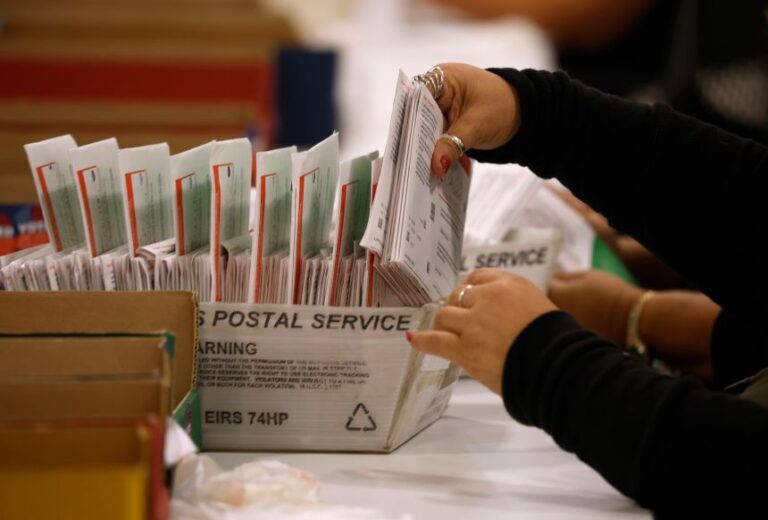
The whistleblower report, released by Democratic Sen. Richard Blumenthal of Connecticut, builds on concerns previously expressed by election officials that the system has not been sufficiently tested ahead of the 2026 midterms.
According to the whistleblower, if even a single ballot envelope scan in a large batch of ballots doesn’t comport with the information in the system, the US Postal Service won’t deliver the entire batch until the discrepancy is resolved.
The road to the 2026 midterms starts now
- Each week, Aaron Blake cuts through the political noise with sharp analysis of the races, candidates and trends that could decide control of Congress. Sign up for 20/26 Vision, a weekly newsletter focusing on this year’s midterms.
It remains to be seen whether the system will actually be used; the issue is the subject of extensive litigation. But Trump — who has himself voted by mail in Florida — has long decried mail voting. And because of that, it skews substantially toward Democrats.
In other words, if mail voters are disenfranchised, it could disproportionately hurt Democrats.
These developments only add to the warning signs about what might lay ahead.
Trump in March signed the executive order giving the USPS an unprecedented role in screening mail ballots. By June, CNN reported that the administration was planning to threaten not to deliver mail ballots for states that failed to turn over their voter lists to the federal government.
(Even some red states have resisted turning over those voter lists.)
By July, Trump delivered a primetime speech that provided no new evidence of widespread fraud, but did exaggerate China’s supposed efforts and baselessly claimed it had been covered up. That turned heads because it invoked national security, and courts generally give presidents greater latitude to take unilateral actions if national security is at stake.
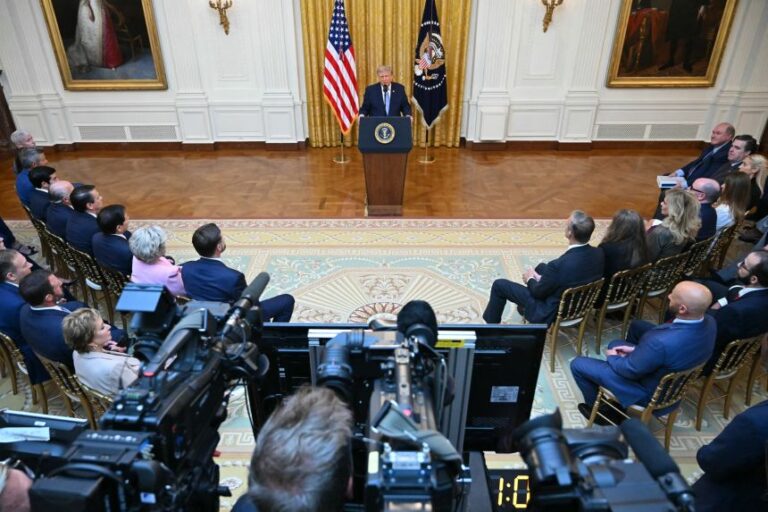
And a few weeks later, Trump declined to rule out precisely such a scenario. In an interview, he left open the possibility of declaring a national security emergency to institute a series of voting changes that the GOP-controlled Congress has failed to pass, including limiting mail voting.
And last week brought a particularly striking scene.
Amid longstanding concerns that the Trump administration might overzealously insert itself into the voting process, the Republican governor of a dark-red state accused Justice Department election monitors of “aggressive” behavior while observing that state’s primary election.
Wyoming Gov. Mark Gordon asked his state’s attorney general to investigate, while adding: “I don’t like the federal government coming in and taking our votes.”
Trump has previously expressed regret for not seizing voting machines after the 2020 election.
It’s impossible to say which of these developments might lead to concrete action or problems ahead of the 2026 election. Trump tends to throw things at the wall, and sometimes he backs off when they prove impractical. Other times, his and his team’s efforts prove half-baked or ham-handed. The courts could get in his way on things like his plans for mail ballots.
But as CNN’s Zachary B. Wolf wrote this weekend, there are a bevy of potential nightmare scenarios in play ahead of this fall’s midterms.
And with Trump’s party staring down a difficult election that could give Democrats at least one chamber of Congress — and thus could sap Trump of power over his final two years as president — it’s worth taking those possibilities seriously.
Read more Digital reconstruction reveals the face of ‘Little Foot,’ a nearly 4 million-year-old human ancestor
History and recent developments suggest Trump is capable of plenty.