 By admin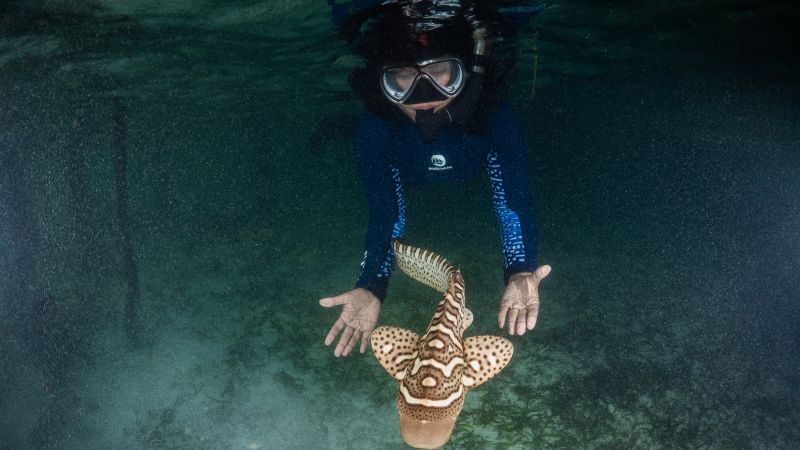
EDITOR’S NOTE: Call to Earth is a CNN editorial series committed to reporting on the environmental challenges facing our planet, together with the solutions. Rolex’s Perpetual Planet Initiative has partnered with CNN to drive awareness and education around key sustainability issues and to inspire positive action.
Read more Why Ossoff’s savage lampooning of Trump is taking off
Just off Kri Island in Raja Ampat, Indonesia, meter-long dotted sharks glide underwater — a sight conservationists saywas vanishingly rare until recently.
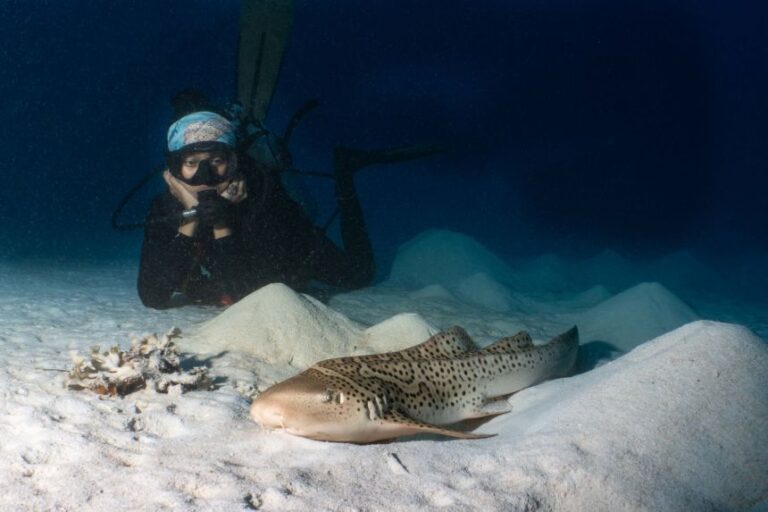
The Indo-Pacific leopard shark — also known as the zebra shark — has historically inhabited reefs along Indo-West Pacific Ocean, the Red Sea, East Africa, Japan, and Australia.
But years of habitat destruction and overfishing have reduced the population by 50-79% over the past three generations (around 57 to 72 years), and they are classified as endangered by the International Union for Conservation of Nature (IUCN). While their historic decline was driven by the shark fin trade, overfishing pressures persist through accidental bycatch and trade in its exotic leather.
In Raja Ampat, less than a decade ago they had all but disappeared. The IUCN SSC Shark Specialist Group estimated that left alone, the archipelago’s population could take between 100 and 200 years to recover naturally.
Now, a global group called ReShark says it is attempting to “restore balance to the ocean” with what it describes as the world’s first shark rewilding program. The initiative, known as the Stegostoma tigrinum Augmentation and Recovery (StAR) project, after the shark’s scientific name, sees leopard sharks bred in aquariums around the world, before the offspring are released into protected waters in Indonesia and Thailand.
“Back in 2019, in Raja Ampat, we estimated that there were about 20 individual adult sharks remaining,” says Mark Erdmann, executive director of ReShark.
“Most conservation activities for sharks usually revolve around either setting up marine protected areas or doing fisheries management. In our case, our niche is we’re doing active recovery.”
Five ways to save our ocean, according to leading conservationists
The idea first emerged during a visit Erdmann made to Singapore’s SEA Aquarium in 2015. The staff showed him tanks crowded with baby leopard sharks they had successfully bred in captivity.
“They said, ‘we actually have a problem, we’re producing too many pups, and we don’t know what to do with them,’” Erdmann recalls.
That encounter sparked an eight-year effort involving governments, aquariums, nonprofits, academics, local communities and conservation scientists who worked together to release captive pups into Indonesian waters.
Like many sharks, the Indo-Pacific leopard sharks are harmless to humans. But unlike most sharks, they reproduce by laying eggs. In fact, they’re the largest of the egg-laying sharks, a trait that makes them well suited for this rewilding effort.
“About 43% of sharks are egg layers,” says David Ebert, program director at the Pacific Shark Research Center, San Jose State University, who is not connected with ReShark. “With live bearing, you have a whole different set of issues to deal with. So, this is probably a good species to potentially start with.”
His global efforts to spot elusive sharks have seen Ebert become known online as the “Lost Shark Guy.” In his opinion, the leopard shark has another advantage, “the cute factor,” which can help the public get on board with conservation initiatives.
Read more Sen. Darline Graham admits in debate: ‘National security is not my thing’

These photographers are working to protect the oceans
ReShark — which is supported by Rolex’s Perpetual Planet Initiative — has partnered with nearly 60 aquariums worldwide. Of those, about a dozen across the United States, Australia, Hong Kong and Singapore are actively breeding sharks for the program, according to Erdmann.
Viable eggs from global aquariums are transported to ReShark’s two nurseries in Raja Ampat and Phuket, Thailand. There, specially trained aquarium managers — nicknamed “shark nannies” — monitor the eggs, care for the pups and prepare them for life in the wild. Once the sharks grow to a meter long and can forage food for themselves, they are tagged and released into protected waters.
The nickname may sound playful, but the work is highly technical. Shark nannies undergo months of training in animal husbandry, often supported by large public aquariums. An internship program hires residents rather than international volunteers, to involve local communities.
“It’s super important that the people in Raja Ampat and the people in Phuket are supportive of this program, and that we don’t fall back to the way it was 10 or 15 years ago when these sharks were being caught and killed,” says Erdmann.
Some shark experts remain cautious about the program’s long-term effectiveness.
Ebert, who has spent more than four decades studying sharks and rays around the world, describes the program as innovative but still largely experimental.
“It’s kind of a neat science project,” he says. “But how’s it going to impact the (shark) population? That’s the big question.”
Among his concerns is whether the released sharks will survive long enough to reproduce in the wild. Since leopard sharks are believed to take between five to 12 years to reach maturity, the earliest ReShark will find out if its first released pups are breeding is 2028.
‘Super corals’ and supplements: Inside the lab trying to save the Great Barrier Reef
He also questions whether releasing more sharks when fishing pressure still exists could unintentionally make them easier targets.
“You could let them out in a marine protected area, but they’re going to swim where they’re going to swim,” Ebert says. “Are they just enhancing the population so there’s more sharks for people to catch?”
Erdmann says that ReShark only operates in sanctuaries committed to conservation. Raja Ampat, for example, is a 46,000 square-kilometer (17,760 square-mile) shark and manta ray sanctuary.
ReShark’s own satellite data from released pups show that, on average, most stay within 100-150 kilometers (62-99 miles) of where they were released in protected waters. And by engaging the local community in these rewilding efforts, fishers have started to actively protect leopard sharks.
Coupled with efforts to secure legal protections across Indonesia and Thailand, Erdmann remains confident of their survival. With 82 pups released since 2023 and 15 healthy sightings in Raja Ampat this year, early results suggest that this strategy is working.
Read more Trump expected to pick Dr. Heidi Overton to lead FDA